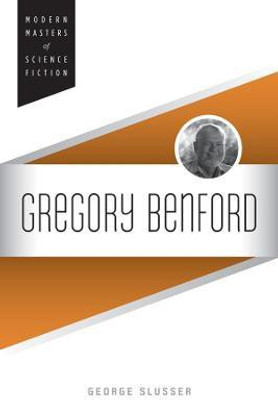
Gregory Benford(English, Electronic book text, Slusser George)
- Slusser George
Paperback & Hardcover deals ―
Amazon IndiaGOFlipkart ₹ 2854SnapdealGOSapnaOnlineGOJain Book AgencyGOBooks Wagon₹1,471Book ChorGOCrosswordGODC BooksGOe-book & Audiobook deals ―
Amazon India GOGoogle Play Books ₹9.99Audible GO* Price may vary from time to time.
* GO = We're not able to fetch the price (please check manually visiting the website).
Know about the book -
Gregory Benford(English, Electronic book text, Slusser George) is written by Slusser George and published by University of Illinois Press. It's available with International Standard Book Number or ISBN identification 0252096037 (ISBN 10) and 9780252096037 (ISBN 13).
Gregory Benford is perhaps best known as the author of Benford's law of controversy: "Passion is inversely proportional to the amount of real information available." That maxim is a quotation from Timescape, Benford's Nebula and Campbell Award-winning 1980 novel, which established his work as an exemplar of "hard science fiction," dedicated to working out the consequences of modern science rather than substituting pseudoscience for fantasy. Like many other current science fiction writers, Benford has tackled the major genres: space travel, time travel, technology running amok, prolonged longevity, searing apocalyptic cosmic events, and alien life, which he theorizes to be more likely viral than intelligent. An astrophysicist by training and profession, Benford has published more than twenty novels, over one hundred short stories, some fifty essays, and myriad articles that display both his scientific rigor as well as a recognition of literary traditions. In this study, George Slusser explores the extraordinary, seemingly inexhaustible display of creative energy in Gregory Benford's life and work. Presenting Benford's ideas on science and the writing of science fiction, the volume addresses the writer's literary production and his place in contemporary science fiction. By identifying direct sources and making parallels with other works and writers, Slusser reveals the vast scope of Benford's knowledge, both of literature and of the major scientific and philosophical issues of our time. Slusser also discusses Benford's numerous scientific articles and nonfiction books and includes a new interview with Benford.
