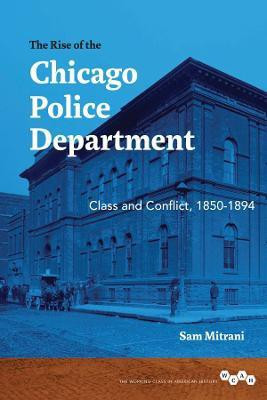
The Rise of the Chicago Police Department(English, Electronic book text, Mitrani Sam)
- Mitrani Sam
Paperback & Hardcover deals ―
Amazon IndiaGOFlipkart ₹ 3600SnapdealGOSapnaOnlineGOJain Book AgencyGOBooks Wagon₹489Book ChorGOCrosswordGODC BooksGOe-book & Audiobook deals ―
Amazon India GOGoogle Play Books ₹9.99Audible GO* Price may vary from time to time.
* GO = We're not able to fetch the price (please check manually visiting the website).
Know about the book -
The Rise of the Chicago Police Department(English, Electronic book text, Mitrani Sam) is written by Mitrani Sam and published by University of Illinois Press. It's available with International Standard Book Number or ISBN identification 0252095332 (ISBN 10) and 9780252095337 (ISBN 13).
Class turmoil, labor, and law and order in Chicago In this book, Sam Mitrani cogently examines the making of the police department in Chicago, which by the late 1800s had grown into the most violent, turbulent city in America. Chicago was roiling with political and economic conflict, much of it rooted in class tensions, and the city's lawmakers and business elite fostered the growth of a professional municipal police force to protect capitalism, its assets, and their own positions in society. Together with city policymakers, the business elite united behind an ideology of order that would simultaneously justify the police force's existence and dictate its functions. Tracing the Chicago police department's growth through events such as the 1855 Lager Beer riot, the Civil War, the May Day strikes, the 1877 railroad workers strike and riot, and the Haymarket violence in 1886, Mitrani demonstrates that this ideology of order both succeeded and failed in its aims. Recasting late nineteenth-century Chicago in terms of the struggle over order, this insightful history uncovers the modern police department's role in reconciling democracy with industrial capitalism.
