Okinawa and the U.S. Military(English, Hardcover, Inoue Masamichi S.)
- Inoue Masamichi S.
Paperback & Hardcover deals ―
Amazon IndiaGOFlipkart ₹ 9159SnapdealGOSapnaOnlineGOJain Book AgencyGOBooks Wagon₹900Book ChorGOCrosswordGODC BooksGOe-book & Audiobook deals ―
Amazon India GOGoogle Play Books GOAudible GO* Price may vary from time to time.
* GO = We're not able to fetch the price (please check manually visiting the website).
Know about the book -
Okinawa and the U.S. Military(English, Hardcover, Inoue Masamichi S.) is written by Inoue Masamichi S. and published by Columbia University Press. It's available with International Standard Book Number or ISBN identification 0231138903 (ISBN 10) and 9780231138901 (ISBN 13).
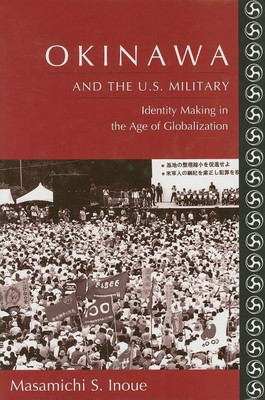
In 1995, an Okinawan schoolgirl was brutally raped by several U.S. servicemen. The incident triggered a chain of protests by women's groups, teachers' associations, labor unions, reformist political parties, and various grassroots organizations across Okinawa prefecture. Reaction to the crime culminated in a rally attended by some 85,000 people, including business leaders and conservative politicians who had seldom raised their voices against the U.S. military presence. Using this event as a point of reference, Inoue explores how Okinawans began to regard themselves less as a group of uniformly poor and oppressed people and more as a confident, diverse, middle-class citizenry embracing the ideals of democracy, human rights, and women's equality. As this identity of resistance has grown, however, the Japanese government has simultaneously worked to subvert it, pressuring Okinawans to support a continued U.S. presence. Inoue traces these developments as well, revealing the ways in which Tokyo has assisted the United States in implementing a system of governance that continues to expand through the full participation and cooperation of residents.Inoue deftly connects local social concerns with the larger political processes of the Japanese nation and the global strategies of the United States. He critically engages social-movement literature along with postmodern/structural/colonial discourses and popular currents and themes in Okinawan and Japanese studies. Rich in historical and ethnographical detail, this volume is a nuanced portrait of the impact of Japanese colonialism, World War II, and U.S. military bases on the formation of contemporary Okinawan identity.
