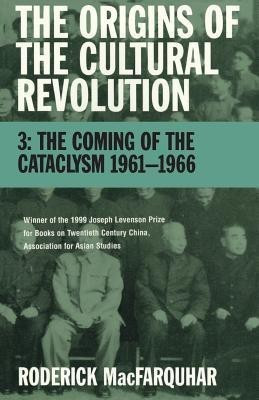
The Origins of the Cultural Revolution(English, Paperback, MacFarquhar Roderick)
- MacFarquhar Roderick
Paperback & Hardcover deals ―
Amazon IndiaGOFlipkart ₹ 7714SnapdealGOSapnaOnlineGOJain Book AgencyGOBooks Wagon₹296Book ChorGOCrosswordGODC BooksGOe-book & Audiobook deals ―
Amazon India GOGoogle Play Books GOAudible GO* Price may vary from time to time.
* GO = We're not able to fetch the price (please check manually visiting the website).
Know about the book -
The Origins of the Cultural Revolution(English, Paperback, MacFarquhar Roderick) is written by MacFarquhar Roderick and published by Columbia University Press. It's available with International Standard Book Number or ISBN identification 0231110839 (ISBN 10) and 9780231110839 (ISBN 13).
This is the final volume in a trilogy that examines the politics, personalities, economics, culture, and international relations of China from the mid-1950s to the mid-1960s. It seeks to answer the central question: Why did Chairman Mao Zedong launch the Cultural Revolution (1966-76), which plunged China into chaos and almost destroyed its Communist Party? The Coming of the Cataclysm starts with the great famine of the early 1960s, which resulted in tens of millions of deaths and set in train a series of emergency measures that increasingly divided Mao from his comrades-in-arms. His anger that they were prepared to adopt "capitalist" methods to rescue the country was sharpened by his belief that Moscow had actually gone capitalist and sold out to the "imperialist" West. From 1961 to 1966, the period covered by this volume, the increasingly urgent question for Mao was how to prevent a similar revolutionary degeneration in China. The Cultural Revolution was his answer.Drawing upon new evidence from Party documents, personal interviews, books, and journals, MacFarquhar details the growing rift between Mao and his colleagues as they attempted to cope with domestic privation and an increasingly hostile international environment-until the Chairman finally decided to smash the unity of the Yan'an Round Table by unleashing society against the party-state.
