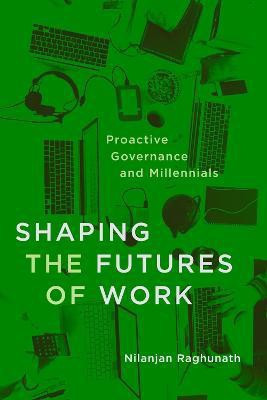
Shaping the Futures of Work(English, Electronic book text, Raghunath Nilanjan)
- Raghunath Nilanjan
Paperback & Hardcover deals ―
Amazon IndiaGOFlipkart ₹ 2898SnapdealGOSapnaOnlineGOJain Book AgencyGOBooks Wagon₹716Book ChorGOCrosswordGODC BooksGOe-book & Audiobook deals ―
Amazon India GOGoogle Play Books GOAudible GO* Price may vary from time to time.
* GO = We're not able to fetch the price (please check manually visiting the website).
Know about the book -
Shaping the Futures of Work(English, Electronic book text, Raghunath Nilanjan) is written by Raghunath Nilanjan and published by McGill-Queen's University Press. It's available with International Standard Book Number or ISBN identification 0228010055 (ISBN 10) and 9780228010050 (ISBN 13).
The widespread belief that tech-savvy, educated millennials are well positioned to handle the challenges of the fourth industrial revolution is unfounded. It does not fully grasp the reality of a flux society, where relevant technological skills and knowledge are continuously changing: no one is permanently tech-savvy. Millennials, like other generations, face the challenge of needing to continually reskill. This has compounded their struggle to begin their careers at a point when there is no longer any guarantee of lifetime employment or retirement at a set age. Shaping the Futures of Work is a timely sociological exploration of the impact of technological innovations on employment. Nilanjan Raghunath proposes that stakeholders such as states, enterprises, and citizens hold equally important roles in ensuring that people can adapt, innovate, and thrive within conditions of flux. A promising model focuses on collaboration and proactive governance. While good governance includes citizen engagement, proactive governance goes one step further, creating inclusive policies, roadmaps, and infrastructure for social and economic progress. This book reveals that lifelong learning and adaptability are imperative, even for well-educated professionals. Using Singapore and Singaporean millennials as a case study, Raghunath examines proactive governance and delivers research and analysis to elucidate career trajectories, pointing to a work ethic that aims to engage with technological futures. Looking at local and global sociological literature to confirm the need for proactive governance, Shaping the Futures of Work suggests that Singaporean millennials - and professionals around the world - need to better prepare themselves for flux, risk, failure, and reinvention for career mobility.
