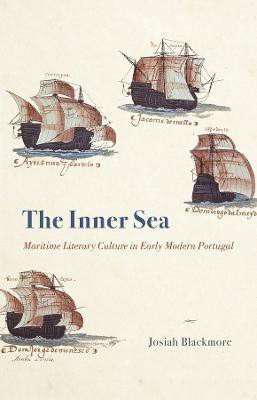
The Inner Sea(English, Hardcover, Blackmore Josiah Professor)
- Blackmore Josiah Professor
Paperback & Hardcover deals ―
Amazon IndiaGOFlipkart ₹ 3007SnapdealGOSapnaOnlineGOJain Book AgencyGOBooks Wagon₹224Book ChorGOCrosswordGODC BooksGOe-book & Audiobook deals ―
Amazon India GOGoogle Play Books GOAudible GO* Price may vary from time to time.
* GO = We're not able to fetch the price (please check manually visiting the website).
Know about the book -
The Inner Sea(English, Hardcover, Blackmore Josiah Professor) is written by Blackmore Josiah Professor and published by The University of Chicago Press. It's available with International Standard Book Number or ISBN identification 0226820467 (ISBN 10) and 9780226820460 (ISBN 13).
An expansive consideration of how nautical themes influenced literature in early modern Portugal. In this book, Josiah Blackmore considers how the sea and seafaring shaped literary creativity in early modern Portugal during the most active, consequential decades of European overseas expansion. Blackmore understands "literary" in a broad sense, including a diverse archive spanning genres and disciplines-epic and lyric poetry, historical chronicles, nautical documents, ship logs, shipwreck narratives, geographic descriptions, and reference to texts of other seafaring powers and literatures of the period-centering on the great Luis de Camoes, arguably the sea poet par excellence of early modern Europe. Blackmore shows that the sea and nautical travel for Camoes and his contemporaries were not merely historical realities; they were also principles of cultural creativity that connected to larger debates in the widening field of the maritime humanities. For Blackmore, the sea, ships, and nautical travel unfold into a variety of symbolic dimensions, and the oceans across the globe that were traversed in the fifteenth and sixteenth centuries correspond to vast reaches within the literary self. The sea and seafaring were not merely themes in textual culture but were also principles that created individual and collective subjects according to oceanic modes of perception. Blackmore concludes with a discussion of depth and sinking in shipwreck narratives as metaphoric and discursive dimensions of the maritime subject, foreshadowing empire's decline.
