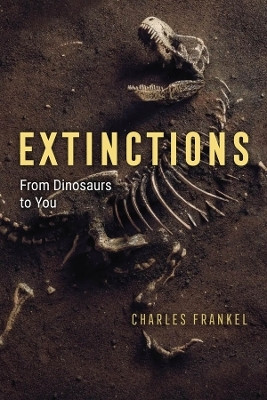
Extinctions(English, Hardcover, Frankel Charles)
- Frankel Charles
Paperback & Hardcover deals ―
Amazon IndiaGOFlipkart ₹ 2291SnapdealGOSapnaOnlineGOJain Book AgencyGOBooks Wagon₹909Book ChorGOCrosswordGODC BooksGOe-book & Audiobook deals ―
Amazon India GOGoogle Play Books GOAudible GO* Price may vary from time to time.
* GO = We're not able to fetch the price (please check manually visiting the website).
Know about the book -
Extinctions(English, Hardcover, Frankel Charles) is written by Frankel Charles and published by The University of Chicago Press. It's available with International Standard Book Number or ISBN identification 022674101X (ISBN 10) and 9780226741017 (ISBN 13).
A compelling answer to an important question: Can past mass extinctions teach us how to avoid future planetary disaster? On its face, the story of mass extinction on Earth is one of unavoidable disaster. Asteroid smashes into planet; goodbye dinosaurs. Planetwide crises seem to be beyond our ability to affect or evade. Extinctions argues that geological history tells an instructive story, one that offers important signs for us to consider. When the asteroid struck, Charles Frankel explains, it set off a wave of cataclysms that wore away at the global ecosystem until it all fell apart. What if there had been a way to slow or even turn back these tides? Frankel believes that the answer to this question holds the key to human survival. Human history, from the massacre of Ice Age megafauna to today's industrial climate change, has brought the planet through another series of cataclysmic events. But the history of mass extinction together with the latest climate research, Frankel maintains, shows us a way out. If we curb our destructive habits, particularly our drive to kill and consume other species, and work instead to conserve what biodiversity remains, the Earth might yet recover. Rather than await decisive disaster, Frankel argues that we must instead take action to reimagine what it means to be human. As he eloquently explains, geological history reminds us that life is not eternal; we can disappear, or we can become something new and continue our evolutionary adventure.
