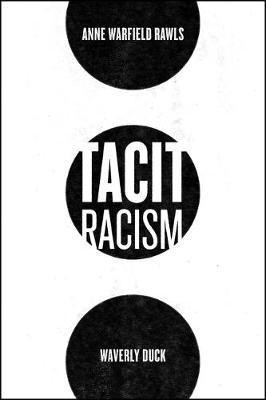
Tacit Racism(English, Paperback, Rawls Anne Warfield)
- Rawls Anne Warfield
Paperback & Hardcover deals ―
Amazon IndiaGOFlipkart ₹ 2744SnapdealGOSapnaOnlineGOJain Book AgencyGOBooks Wagon₹1,349Book ChorGOCrosswordGODC BooksGOe-book & Audiobook deals ―
Amazon India GOGoogle Play Books GOAudible GO* Price may vary from time to time.
* GO = We're not able to fetch the price (please check manually visiting the website).
Know about the book -
Tacit Racism(English, Paperback, Rawls Anne Warfield) is written by Rawls Anne Warfield and published by The University of Chicago Press. It's available with International Standard Book Number or ISBN identification 022670369X (ISBN 10) and 9780226703695 (ISBN 13).
We need to talk about racism before it destroys our democracy. And that conversation needs to start with an acknowledgement that racism is coded into even the most ordinary interactions. Every time we interact with another human being, we unconsciously draw on a set of expectations to guide us through the encounter. What many of us in the United States-especially white people-do not recognize is that centuries of institutional racism have inescapably molded those expectations. This leads us to act with implicit biases that can shape everything from how we greet our neighbors to whether we take a second look at a resume. This is tacit racism, and it is one of the most pernicious threats to our nation. In Tacit Racism, Anne Warfield Rawls and Waverly Duck illustrate the many ways in which racism is coded into the everyday social expectations of Americans, in what they call Interaction Orders of Race. They argue that these interactions can produce racial inequality, whether the people involved are aware of it or not, and that by overlooking tacit racism in favor of the fiction of a "color-blind" nation, we are harming not only our society's most disadvantaged-but endangering the society itself. Ultimately, by exposing this legacy of racism in ordinary social interactions, Rawls and Duck hope to stop us from merely pretending we are a democratic society and show us how we can truly become one.
