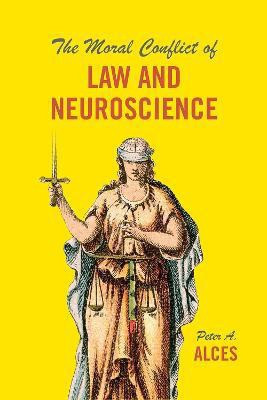
The Moral Conflict of Law and Neuroscience(English, Paperback, Alces Peter A.)
- Alces Peter A.
Paperback & Hardcover deals ―
Amazon IndiaGOFlipkart ₹ 3305SnapdealGOSapnaOnlineGOJain Book AgencyGOBooks Wagon₹1,112Book ChorGOCrosswordGODC BooksGOe-book & Audiobook deals ―
Amazon India GOGoogle Play Books GOAudible GO* Price may vary from time to time.
* GO = We're not able to fetch the price (please check manually visiting the website).
Know about the book -
The Moral Conflict of Law and Neuroscience(English, Paperback, Alces Peter A.) is written by Alces Peter A. and published by The University of Chicago Press. It's available with International Standard Book Number or ISBN identification 022651353X (ISBN 10) and 9780226513539 (ISBN 13).
Law relies on a conception of human agency, the idea that humans are capable of making their own choices and are morally responsible for the consequences. But what if that is not the case? Over the past half century, the story of the law has been one of increased acuity concerning the human condition, especially the workings of the brain. The law already considers select cognitive realities in evaluating questions of agency and responsibility, such as age, sanity, and emotional distress. As new neuroscientific research comprehensively calls into question the very idea of free will, how should the law respond to this revised understanding? Peter A. Alces considers where and how the law currently fails to appreciate the neuroscientific revelation that humans may in key ways lack normative free will and therefore moral responsibility. The most accessible setting in which to consider the potential impact of neuroscience is criminal law, as certain aspects of criminal law already reveal the naivete of most normative reasoning, such as the inconsistent treatment of people with equally disadvantageous cognitive deficits, whether congenital or acquired.But tort and contract law also assume a flawed conception of human agency and responsibility. Alces reveals the internal contradictions of extant legal doctrine and concludes by considering what would be involved in constructing novel legal regimes based on emerging neuroscientific insights.
