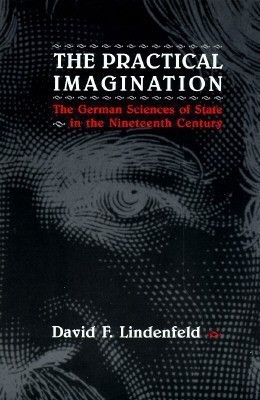
The Practical Imagination - The German Sciences of State in the Nineteenth Century(English, Paperback, Lindenfeld David F)
- Lindenfeld David F
Paperback & Hardcover deals ―
Amazon IndiaGOFlipkart ₹ 3408SnapdealGOSapnaOnlineGOJain Book AgencyGOBooks Wagon₹294Book ChorGOCrosswordGODC BooksGOe-book & Audiobook deals ―
Amazon India GOGoogle Play Books GOAudible GO* Price may vary from time to time.
* GO = We're not able to fetch the price (please check manually visiting the website).
Know about the book -
The Practical Imagination - The German Sciences of State in the Nineteenth Century(English, Paperback, Lindenfeld David F) is written by Lindenfeld David F and published by The University of Chicago Press. It's available with International Standard Book Number or ISBN identification 0226482421 (ISBN 10) and 9780226482422 (ISBN 13).
Drawing on the work of Foucault and Bourdieu, this book sets out to illuminate the practical imagination as it was exhibited in the transformation of the political and social sciences during 19th-century Germany. Using information derived from many sources, including state and university archives, private correspondence, and a survey of lecture offerings in German universities, it examines the original group of learned disciplines which originated in 18th-century Germany as a curriculum to train state officials in the administration and reform of society. These disciplines included economics, statistics, public administration, finance and state law, as well as agriculture, forestry and mining. The book explores the ways in which some systems of knowledge became extinct, and how new ones came into existence, while others migrated to different subject areas. Lindenfeld argues that these sciences of state developed a technique of deliberation on practical issues such as tax policy and welfare which serves as a model for contemporary administrations.
