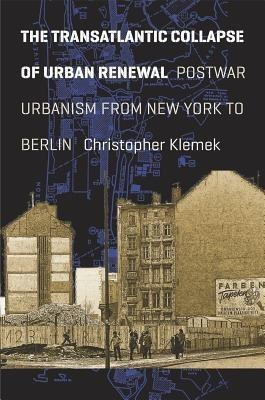
The Transatlantic Collapse of Urban Renewal(English, Hardcover, Klemek Christopher)
- Klemek Christopher
Paperback & Hardcover deals ―
Amazon IndiaGOFlipkart ₹ 8119SnapdealGOSapnaOnlineGOJain Book AgencyGOBooks Wagon₹1,629Book ChorGOCrosswordGODC BooksGOe-book & Audiobook deals ―
Amazon India GOGoogle Play Books GOAudible GO* Price may vary from time to time.
* GO = We're not able to fetch the price (please check manually visiting the website).
Know about the book -
The Transatlantic Collapse of Urban Renewal(English, Hardcover, Klemek Christopher) is written by Klemek Christopher and published by The University of Chicago Press. It's available with International Standard Book Number or ISBN identification 0226441741 (ISBN 10) and 9780226441740 (ISBN 13).
"The Transatlantic Collapse of Urban Renewal" examines how postwar thinkers from both sides of the Atlantic considered urban landscapes radically changed by the political and physical realities of sprawl, urban decay, and urban renewal. With a sweep that encompasses New York, London, Berlin, Philadelphia, and Toronto, among others, Christopher Klemek traces changing responses to the challenging issues that most affected the lives of the world's cities. In the postwar decades, the principles of modernist planning came to be challenged - in the grassroots revolts against the building of freeways through urban neighborhoods, for instance, or by academic critiques of slum clearance policy agendas - and then began to collapse entirely. Over the 1960s, several alternative views of city life emerged among neighborhood activists, New Left social scientists, and neoconservative critics. Ultimately, while a pessimistic view of urban crisis may have won out in the United States and Great Britain, Klemek demonstrates that other countries more successfully harmonized urban renewal and its alternatives.This much anticipated book provides one of the first truly international perspectives on issues central to historians and planners alike, making it essential reading for anyone engaged with either field.
