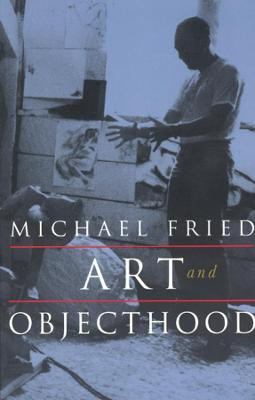
Art and Objecthood(English, Paperback, Fried Michael)
- Fried Michael
Paperback & Hardcover deals ―
Amazon IndiaGOFlipkart ₹ 3873SnapdealGOSapnaOnlineGOJain Book AgencyGOBooks Wagon₹868Book ChorGOCrosswordGODC BooksGOe-book & Audiobook deals ―
Amazon India GOGoogle Play Books GOAudible GO* Price may vary from time to time.
* GO = We're not able to fetch the price (please check manually visiting the website).
Know about the book -
Art and Objecthood(English, Paperback, Fried Michael) is written by Fried Michael and published by The University of Chicago Press. It's available with International Standard Book Number or ISBN identification 0226263193 (ISBN 10) and 9780226263199 (ISBN 13).
Michael Fried's often controversial art criticism defines the contours of late modernism in the visual arts. This volume contains 27 pieces, including the introduction to the catalogue for "Three American Painters," the text of his book "Morris Louis," and "Art and Objecthood." Originally published between 1962 and 1977, the essays continue to generate debate today. These are uncompromising writings, aware of their transformative power during a time of intense controversy about the nature of modernism and the aims and essence of advanced painting and sculpture. Ranging from brief reviews to extended essays, and including major critiques of Jackson Pollock, Morris Louis, Kenneth Noland, Jules Olitski, Frank Stella, and Anthony Caro, these writings establish a set of basic terms for understanding key issues in high modernism: the viability of Clement Greenberg's account of the infralogic of modernism, the status of figuration after Pollock, the centrality of the problem of shape, the nature of pictorial and sculptural abstraction, and the relationship between work and beholder.In a number of essays Fried contrasts the modernist enterprise with minimalist or literalist art, and, taking a position that remains provocative to this day, he argues that minimalism is essentially a genre of theatre, hence artistically self-defeating. For this volume Fried has also provided an extensive introductory essay in which he discusses how he became an art critic, clarifies his intentions in his art criticism, and draws crucial distinctions between his art criticism and the art history he also wrote.
