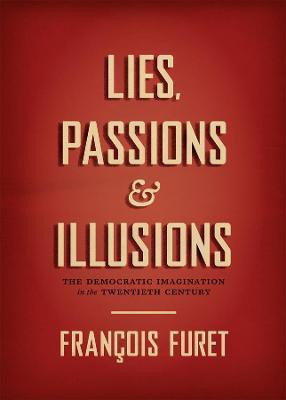
Lies, Passions, and Illusions(English, Hardcover, Furet Francois)
- Furet Francois
Paperback & Hardcover deals ―
Amazon IndiaGOFlipkart ₹ 1804SnapdealGOSapnaOnlineGOJain Book AgencyGOBooks Wagon₹279Book ChorGOCrosswordGODC BooksGOe-book & Audiobook deals ―
Amazon India GOGoogle Play Books GOAudible GO* Price may vary from time to time.
* GO = We're not able to fetch the price (please check manually visiting the website).
Know about the book -
Lies, Passions, and Illusions(English, Hardcover, Furet Francois) is written by Furet Francois and published by The University of Chicago Press. It's available with International Standard Book Number or ISBN identification 022611449X (ISBN 10) and 9780226114491 (ISBN 13).
Francois Furet needs little introduction. Widely considered one of the leading historians of the French Revolution, he was a maverick for his time, shining a critical light on the entrenched Marxist interpretations that prevailed during the mid-twentieth century. Shortly after his death in 1997, the New York Review of Books called him "one of the most influential men in contemporary France." Lies, Passions, and Illusions is a fitting capstone to this celebrated author's oeuvre: a late-career conversation with philosopher Paul Ricoeur on the twentieth century writ large, a century of violence and turmoil, of unprecedented wealth and progress, in which history advanced, for better or worse, in quantum leaps. This conversation would be, sadly, Furet's last - he died while Ricoeur was completing his edits. Ricoeur did not want to publish his half without Furet's approval, so what remains is Furet's alone, an astonishingly cohesive meditation on the political passions of the twentieth century. With strokes at once broad and incisive, he examines the many different trajectories that nations of the West have followed over the past hundred years.It is a dialogue with history as it happened but also as a form of thought. It is a dialogue with his critics, with himself, and with those major thinkers - from Tocqueville to Hannah Arendt - whose ideas have shaped our understanding of the tragic dramas and upheavals of the modern era. It is a testament to the crucial role of the historian, a reflection on how history is made and lived, and how the imagination is a catalyst for political change. Whether new to Furet or deeply familiar with his work, readers will find thought-provoking assessments on every page, a deeply moving look back at one of the most tumultuous periods of history and how we might learn and look forward from it.
