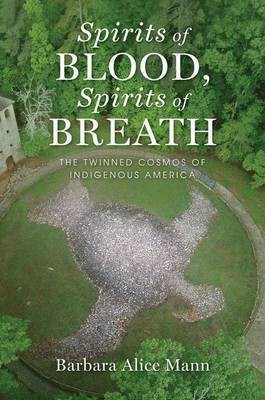
Spirits of Blood, Spirits of Breath(English, Paperback, Mann Barbara Alice)
- Mann Barbara Alice
Paperback & Hardcover deals ―
Amazon IndiaGOFlipkart ₹ 2299SnapdealGOSapnaOnlineGOJain Book AgencyGOBooks Wagon₹339Book ChorGOCrosswordGODC BooksGOe-book & Audiobook deals ―
Amazon India GOGoogle Play Books GOAudible GO* Price may vary from time to time.
* GO = We're not able to fetch the price (please check manually visiting the website).
Know about the book -
Spirits of Blood, Spirits of Breath(English, Paperback, Mann Barbara Alice) is written by Mann Barbara Alice and published by Oxford University Press Inc. It's available with International Standard Book Number or ISBN identification 0199997195 (ISBN 10) and 9780199997190 (ISBN 13).
Before invasion, Turtle Island--or North America--was home to vibrant cultures that shared long-standing philosophical precepts. The most important and wide-spread of these was the view of reality as a collaborative binary known as the Twinned Cosmos of Blood and Breath. This binary system was built on the belief that neither half of the cosmos can exist without its twin; both halves are, therefore, necessary and good. Western anthropologists typically shorthand the Twinned Cosmos as "Sky and Earth," but this erroneously saddles it with Christian baggage and, worse, imposes a hierarchy that puts sky quite literally above earth. None of this Western ideology legitimately applies to traditional Indigenous American thought, which is about equal cooperation and the continual recreation of reality.Spirits of Blood, Spirits of Breath examines traditional historical concepts of spirituality among North American Indians both at and, to the extent it can be determined, before contact. In doing so, Barbara Mann rescues the authentically indigenous ideas from Western, and especially missionary, interpretations. In addition to early European source material, she uses Indian oral traditions, traced as much as possible to early sources, and Indian records, including pictographs, petroglyphs, bark books, and wampum. Moreover, Mann respects each Native culture as a discrete unit, rather than generalizing them as is often done in Western anthropology. To this end, she collates material in accordance with actual historical, linguistic, and traditional linkages among the groups at hand, with traditions clearly identified by group and, where recorded, by speaker. In this way she provides specialists and non-specialists alike a window into the seemingly lost, and often caricatured world of Indigenous American thought.
