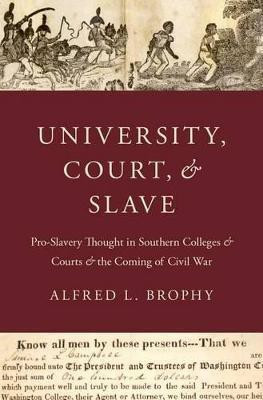
University, Court, and Slave(English, Hardcover, Brophy Alfred L.)
- Brophy Alfred L.
Paperback & Hardcover deals ―
Amazon IndiaGOFlipkart ₹ 10918SnapdealGOSapnaOnlineGOJain Book AgencyGOBooks Wagon₹1,859Book ChorGOCrosswordGODC BooksGOe-book & Audiobook deals ―
Amazon India GOGoogle Play Books GOAudible GO* Price may vary from time to time.
* GO = We're not able to fetch the price (please check manually visiting the website).
Know about the book -
University, Court, and Slave(English, Hardcover, Brophy Alfred L.) is written by Brophy Alfred L. and published by Oxford University Press Inc. It's available with International Standard Book Number or ISBN identification 0199964238 (ISBN 10) and 9780199964239 (ISBN 13).
Alfred L. Brophy's University, Court, and Slave reveals long-forgotten connections between pre-Civil War southern universities and slavery. Universities and their faculty owned people -- sometimes dozens of people -- and profited from their labor while many were physically abused on their campuses. Education was often paid for through the profits of enslaved labor. University faculty -- and students -- also promoted the institution of slavery. They wrote about the history of slavery, its central role in the southern economy, and developed a political theory that justified keeping some people in slavery. The university faculty spoke a common language of economic utility, history, and philosophy with those who made the laws for the southern states. That extensive writing promoting slavery helps us understand how southern politicians and judges thought about slavery.As antislavery rhetoric gained momentum, southern academics and their allies in the courts became bolder in their claims. Some went so far as to say that slavery was supported by natural law. The combination of economic reasoning and historical precedent helped shape a southern, proslavery jurisprudence. Following Lincoln's November 1860 election southern academics joined politicians, judges, lawyers, and other leaders to argue that their economy and society was threatened. Southern jurisprudence led them to believe that any threats to slavery and property justified secession. In some cases, academics took their case to the southern public and, in one case, to the battlefield, to defend slavery.
