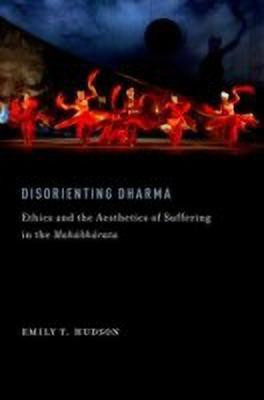
Disorienting Dharma(English, Paperback, Hudson Emily T.)
- Hudson Emily T.
Paperback & Hardcover deals ―
Amazon IndiaGOFlipkart ₹ 8684SnapdealGOSapnaOnlineGOJain Book AgencyGOBooks Wagon₹267Book ChorGOCrosswordGODC BooksGOe-book & Audiobook deals ―
Amazon India GOGoogle Play Books GOAudible GO* Price may vary from time to time.
* GO = We're not able to fetch the price (please check manually visiting the website).
Know about the book -
Disorienting Dharma(English, Paperback, Hudson Emily T.) is written by Hudson Emily T. and published by Oxford University Press Inc. It's available with International Standard Book Number or ISBN identification 0199860785 (ISBN 10) and 9780199860784 (ISBN 13).
This book explores the relationship between ethics, aesthetics, and religion in classical Indian literature and literary theory by focusing on one of the most celebrated and enigmatic texts to emerge from the Sanskrit epic tradition, the Mahabharata. This text, which is widely acknowledged to be one of the most important sources for the study of South Asian religious, social, and political thought, is a foundational text of the Hindu tradition(s) and considered to be a major transmitter of dharma (moral, social, and religious duty), perhaps the single most important concept in the history of Indian religions. However, in spite of two centuries of Euro-American scholarship on the epic, basic questions concerning precisely how the epic is communicating its ideas about dharma and precisely what it is saying about it are still being explored. Disorienting Dharma brings to bear a variety of interpretive lenses (Sanskrit literary theory, reader-response theory, and narrative ethics) to examine these issues. One of the first book-length studies to explore the subject from the lens of Indian aesthetics, it argues that such a perspective yields startling new insights into the nature of the depiction of dharma in the epic through bringing to light one of the principle narrative tensions of the epic: the vexed relationship between dharma and suffering. In addition, it seeks to make the Mahabharata interesting and accessible to a wider audience by demonstrating how reading the Mahabharata, perhaps the most harrowing story in world literature, is a fascinating, disorienting, and ultimately transformative experience.
