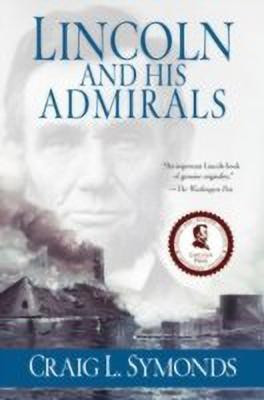
Lincoln and His Admirals(English, Paperback, Symonds Craig)
- Symonds Craig
Paperback & Hardcover deals ―
Amazon IndiaGOFlipkart ₹ 2033SnapdealGOSapnaOnlineGOJain Book AgencyGOBooks Wagon₹333Book ChorGOCrosswordGODC BooksGOe-book & Audiobook deals ―
Amazon India GOGoogle Play Books GOAudible GO* Price may vary from time to time.
* GO = We're not able to fetch the price (please check manually visiting the website).
Know about the book -
Lincoln and His Admirals(English, Paperback, Symonds Craig) is written by Symonds Craig and published by Oxford University Press Inc. It's available with International Standard Book Number or ISBN identification 0199751579 (ISBN 10) and 9780199751570 (ISBN 13).
Abraham Lincoln began his presidency admitting that he knew "but little of ships," but he quickly came to preside over the largest national armada to that time, not eclipsed until World War I. Written by naval historian Craig L. Symonds, Lincoln and His Admirals unveils an aspect of Lincoln's presidency unexamined by historians until now, revealing how he managed the men who ran the naval side of the Civil War, and how the activities of the Union Navy ultimately affected the course of history. Beginning with a gripping account of the attempt to re-supply Fort Sumter--a comedy of errors that shows all too clearly the fledgling president's inexperience--Symonds traces Lincoln's steady growth as a wartime commander-in-chief. Absent a Secretary of Defense, he would eventually become de facto commander of joint operations along the coast and on the rivers. That involved dealing with the men who ran the Navy: the loyal but often cranky Navy Secretary Gideon Welles, the quiet and reliable David G. Farragut, the flamboyant and unpredictable Charles Wilkes, the ambitious ordnance expert John Dahlgren, the well-connected Samuel Phillips Lee, and the self-promoting and gregarious David Dixon Porter. Lincoln was remarkably patient; he often postponed critical decisions until the momentum of events made the consequences of those decisions evident. But Symonds also shows that Lincoln could act decisively. Disappointed by the lethargy of his senior naval officers on the scene, he stepped in and personally directed an amphibious assault on the Virginia coast, a successful operation that led to the capture of Norfolk. The man who knew "but little of ships" had transformed himself into one of the greatest naval strategists of his age. Co-winner of the 2009 Lincoln PrizeWinner of the 2009 Barondess/Lincoln Prize by the Civil War Round Table of New YorkJohn Lyman Award of the North American Society for Oceanic HistoryDaniel and Marilyn Laney Prize by the Austin Civil War Round TableNevins-Freeman Prize of the Civil War Round Table of Chicago
