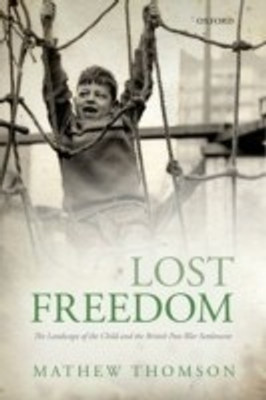
Lost Freedom(English, Hardcover, Thomson Mathew)
- Thomson Mathew
Paperback & Hardcover deals ―
Amazon IndiaGOFlipkart ₹ 2952SnapdealGOSapnaOnlineGOJain Book AgencyGOBooks Wagon₹209Book ChorGOCrosswordGODC BooksGOe-book & Audiobook deals ―
Amazon India GOGoogle Play Books GOAudible GO* Price may vary from time to time.
* GO = We're not able to fetch the price (please check manually visiting the website).
Know about the book -
Lost Freedom(English, Hardcover, Thomson Mathew) is written by Thomson Mathew and published by Oxford University Press. It's available with International Standard Book Number or ISBN identification 0199677484 (ISBN 10) and 9780199677481 (ISBN 13).
Lost Freedom addresses the widespread feeling that there has been a fundamental change in the social life of children in recent decades: the loss of childhood freedom, and in particular, the loss of freedom to roam beyond the safety of home. Mathew Thomson explores this phenomenon, concentrating on the period from the Second World War until the 1970s, and considering the roles of psychological theory, traffic, safety consciousness, anxiety about sexual danger, and television in the erosion of freedom.Thomson argues that the Second World War has an important place in this story, with war-borne anxieties encouraging an emphasis on the central importance of a landscape of home. War also encouraged the development of specially designed spaces for the cultivation of the child, including the adventure playground, and the virtual landscape of children's television. However, before the 1970s, British children still had much more physical freedom than they do today. Lost Freedom explores why this situation has changed. The volume pays particular attention to the 1970s as a period of transition, and one which saw radical visions of child liberation, but with anxieties about child protection also escalating in response. This is strikingly demonstrated in the story of how the paedophile emerged as a figure of major public concern. Thomson argues that this crisis of concern over child freedom is indicative of some of the broader problems of the social settlements that had been forged out of the Second World War.
