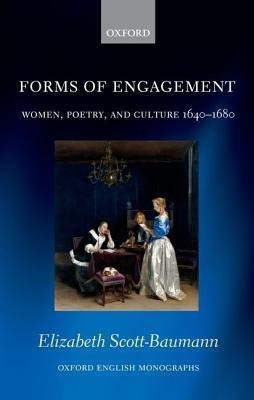
Forms of Engagement(English, Hardcover, Scott-Baumann Elizabeth)
- Scott-Baumann Elizabeth
Paperback & Hardcover deals ―
Amazon IndiaGOFlipkart ₹ 3109SnapdealGOSapnaOnlineGOJain Book AgencyGOBooks Wagon₹296Book ChorGOCrosswordGODC BooksGOe-book & Audiobook deals ―
Amazon India GOGoogle Play Books GOAudible GO* Price may vary from time to time.
* GO = We're not able to fetch the price (please check manually visiting the website).
Know about the book -
Forms of Engagement(English, Hardcover, Scott-Baumann Elizabeth) is written by Scott-Baumann Elizabeth and published by Oxford University Press. It's available with International Standard Book Number or ISBN identification 0199676526 (ISBN 10) and 9780199676521 (ISBN 13).
What does it mean for a woman to write an elegy, ode, epic, or blazon in the seventeenth century? How does their reading affect women's use of particular poetic forms and what can the physical appearance of a poem, in print and manuscript, reveal about how that poem in turn was read?Forms of Engagement shows how the aesthetic qualities of early modern women's poetry emerge from the culture in which they write. It reveals previously unrecognized patterns of influence between women poets Katherine Philips, Lucy Hutchinson, and Margaret Cavendish and their peers and predecessors: how Lucy Hutchinson responded to Ben Jonson and John Milton, how Margaret Cavendish responded to Thomas Hobbes and the scientists of the early Royal Society, and how Katherine Philips re-worked Donne's lyrics and may herself have influenced Abraham Cowley and Andrew Marvell. This book places analysis of form at the centre of an historical study of women writers, arguing that reading for form is reading for influence. Hutchinson, Philips, and Cavendish were immersed in mid-seventeenth century cultural developments, from the birth of experimental philosophy, to the local and state politics of civil war and the rapid expansion of women's print publication. For women poets, reworking poetic forms such as elegy, ode, epic, and couplet was a fundamental engagement with the culture in which they wrote. By focusing on these interactions, rather than statements of exclusion and rejection, a formalist reading of these women can actually provide a more nuanced historical view of their participation in literary culture.
