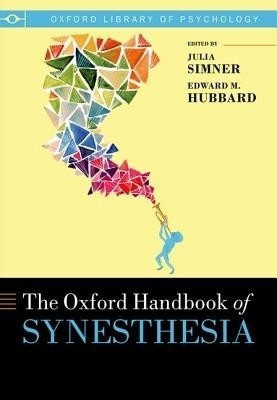
Oxford Handbook of Synesthesia(English, Hardcover, unknown)
- unknown
Paperback & Hardcover deals ―
Amazon IndiaGOFlipkart ₹ 7309SnapdealGOSapnaOnlineGOJain Book AgencyGOBooks Wagon₹259Book ChorGOCrosswordGODC BooksGOe-book & Audiobook deals ―
Amazon India GOGoogle Play Books GOAudible GO* Price may vary from time to time.
* GO = We're not able to fetch the price (please check manually visiting the website).
Know about the book -
Oxford Handbook of Synesthesia(English, Hardcover, unknown) is written by unknown and published by Oxford University Press. It's available with International Standard Book Number or ISBN identification 0199603324 (ISBN 10) and 9780199603329 (ISBN 13).
Synesthesia is a fascinating phenomenon which has captured the imagination of scientists and artists alike. This inherited condition gives rise to a kind of 'merging of the senses', and so for those who experience it, everyday activities like reading or listening to music trigger extraordinary impressions of colours, tastes, smells, shapes and other sensations. Synesthesia research also informs us about normal sensation because all people experience cross-sensorymappings to an implicit degree. Synesthesia has a considerably broad appeal, and in recent decades the field has experienced a resurgence of interest. These advances have painted a detailed story about the development, genetics, psychology, history, aesthetics and neuroscience of synesthesia, andprovide a contemporary source of study for a new generation of scholars. The Oxford Handbook of Synesthesia brings together this broad body of knowledge into one definitive state-of-the-art handbook. It includes a large number of concisely written chapters, under broader headings, which tackle questions about the origins of synesthesia, its neurological basis, its links with language and numbers, attention and perception, and with 'normal' sensory and linguistic processing. It asks questions about synesthesia's role in language evolution, and presents bothcontemporary and historical overviews of the field. It shows synaesthesia's costs and benefits (e.g., in creativity, memory, imagery) and describes how synaesthesia can provide inspiration for artists and designers. The book ends with a series of perspectives on synesthesia, including a first-hand account,and philosophical viewpoints which show how synaesthesia poses unique questions about sensation, consciousness and the nature of reality.
