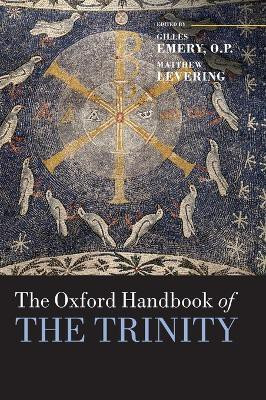
The Oxford Handbook of the Trinity(English, Hardcover, unknown)
- unknown
Paperback & Hardcover deals ―
Amazon IndiaGOFlipkart ₹ 23683SnapdealGOSapnaOnlineGOJain Book AgencyGOBooks Wagon₹247Book ChorGOCrosswordGODC BooksGOe-book & Audiobook deals ―
Amazon India GOGoogle Play Books GOAudible GO* Price may vary from time to time.
* GO = We're not able to fetch the price (please check manually visiting the website).
Know about the book -
The Oxford Handbook of the Trinity(English, Hardcover, unknown) is written by unknown and published by Oxford University Press. It's available with International Standard Book Number or ISBN identification 0199557810 (ISBN 10) and 9780199557813 (ISBN 13).
This handbook examines the history of Trinitarian theology and reveals the Nicene unity still at work among Christians today despite ecumenical differences and the variety of theological perspectives. The forty-three chapters are organized into the following seven parts: the Trinity in Scripture, Patristic witnesses to the Trinitarian faith, Medieval appropriations of the Trinitarian faith, the Reformation through to the 20th Century, Trinitarian Dogmatics, the Trinity and Christian life, and Dialogues (addressing ecumenical, interreligious, and cultural interactions). The phrase 'Trinitarian faith' can hardly be understood outside of reference to the Councils of Nicaea and Constantinople and to their reception: the doctrine of the Trinity is indissociably connected to the reading of Scripture through the ecclesial and theological traditions. The modern period is characterized especially by the arrival of history, under two principal aspects: 'historical theology' and 'philosophies of history'. In contemporary theology, the principal 'theological loci' are Trinity and creation, Trinity and grace, Trinity and monotheism, Trinity and human life (ethics, society, politics and culture), and more broadly Trinity and history. In all these areas, this handbook offers essays that do justice to the diversity of view points, while also providing, insofar as possible, a coherent ensemble.
