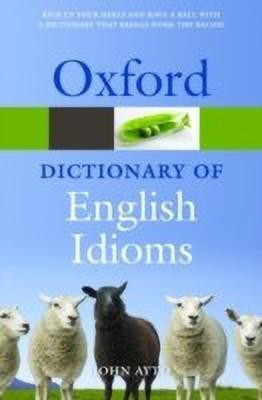
Oxford Dictionary of English Idioms(English, Paperback, unknown)
- unknown
Paperback & Hardcover deals ―
Amazon IndiaGOFlipkart ₹ 587SnapdealGOSapnaOnlineGOJain Book Agency₹499Books Wagon₹247Book ChorGOCrosswordGODC BooksGOe-book & Audiobook deals ―
Amazon India GOGoogle Play Books GOAudible GO* Price may vary from time to time.
* GO = We're not able to fetch the price (please check manually visiting the website).
Know about the book -
Oxford Dictionary of English Idioms(English, Paperback, unknown) is written by unknown and published by Oxford University Press. It's available with International Standard Book Number or ISBN identification 019954378X (ISBN 10) and 9780199543786 (ISBN 13).
Did you know that 'flavour of the month' originated in a marketing campaign in American ice-cream parlours in the 1940s, when a particular flavour would be specially promoted for a month at a time? And did you know that 'off the cuff' refers to the rather messy practice of writing impromptu notes on one's shirt cuff before speaking in public? These and many more idioms are explained and put into context in this third edition of the Oxford Dictionary of EnglishIdioms. The volume takes a fresh look at the idiomatic phrases and sayings that make English the rich and intriguing language that it is. This major new edition contains entries for over 6,000 idioms, including 700 entirely new entries, based on Oxford's language monitoring and the ongoing third edition of the Oxford English Dictionary. These include a range of recently established idioms such as 'the elephant in the corner', 'go figure', 'like a rat up a drainpipe', 'sex on legs', 'step up tothe plate', 'too posh to push', 'a walk in the park', 'win ugly'. This edition also features a greatly increased number of cross-references, making it ideal for quick reference. Many entries include additional features which give more detailed background on the idiom in question. For example, did you know that 'taken aback' was adopted from nautical terminology that described a ship unable to move forward because of a strong headwind pressing its sails back against the mast? Anyone interested in the colourful side of the English language will get hours of fun browsing from this fascinating and informative volume.
