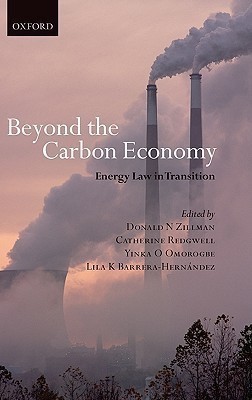
Beyond the Carbon Economy - Energy Law in Transition 1 Edition(English, Hardcover, unknown)
- unknown
Paperback & Hardcover deals ―
Amazon IndiaGOFlipkart ₹ 420SnapdealGOSapnaOnlineGOJain Book AgencyGOBooks Wagon₹239Book ChorGOCrosswordGODC BooksGOe-book & Audiobook deals ―
Amazon India GOGoogle Play Books GOAudible GO* Price may vary from time to time.
* GO = We're not able to fetch the price (please check manually visiting the website).
Know about the book -
Beyond the Carbon Economy - Energy Law in Transition 1 Edition(English, Hardcover, unknown) is written by unknown and published by Oxford University Press. It's available with International Standard Book Number or ISBN identification 0199532699 (ISBN 10) and 9780199532698 (ISBN 13).
The present energy economy, with its heavy dependence on fossil fuels, is not sustainable over the medium to long term for many interconnected reasons. Climate change is now recognized as posing a serious threat. Energy and resource decisions involving the carbon fuels therefore play a large role in this threat. Fossil fuel reserves may also be running short and many of the major reserves are in politically unstable parts of the world. Yet citizens in nations with rapidly developing economies aspire to the benefits of the modern energy economy. China and India alone have 2.4 billion potential customers for cars, industries, and electrical services. Even so, more than half of the world's citizens still lack access to energy. Decisions involving fossil fuels are therefore a significant part of the development equation. This volume explains how the law can impede or advance the shift to a world energy picture significantly different from that which exists today. It first examines the factors that create the problems of the present carbon economy, including environmental concerns and development goals. It then provides international and regional legal perspectives, examining public international law, regional legal structures, the responses of international legal bodies, and the role of major international nongovernmental actors. The book then moves on to explore sectoral perspectives including the variety of renewable energy sources, new carbon fuels, nuclear power, demand controls, and energy efficiency. Finally, the authors examine how particular States are, could, or should, be adapting legally to the challenges of moving beyond the carbon economy.
