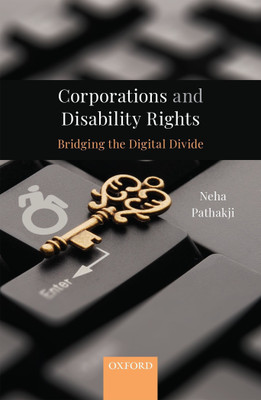
Corporations and Disability Rights - Bridging the Digital Divide(English, Hardcover, Pathakji Neha)
- Pathakji Neha
Paperback & Hardcover deals ―
Amazon IndiaGOFlipkart ₹ 771SnapdealGOSapnaOnlineGOJain Book Agency₹850Books Wagon₹309Book ChorGOCrosswordGODC BooksGOe-book & Audiobook deals ―
Amazon India GOGoogle Play Books GOAudible GO* Price may vary from time to time.
* GO = We're not able to fetch the price (please check manually visiting the website).
Know about the book -
Corporations and Disability Rights - Bridging the Digital Divide(English, Hardcover, Pathakji Neha) is written by Pathakji Neha and published by Oxford University Press. It's available with International Standard Book Number or ISBN identification 0199485232 (ISBN 10) and 9780199485239 (ISBN 13).
The emergence of a decentralized, fragmented, and low-cost Internet opened up possibilities for persons with disabilities to lead an independent and inclusive life, which had been denied to them in the physical world. However, despite advancement in technology persons with disabilities have been excluded. With the digital divide opening up before them, there is a danger that social injustice faced by persons with disabilities in the physical world may be replayed in virtual space. Since the Internet is largely dominated by corporations, this digital divide cannot be bridged without questioning their role. This book explores the interplay between human rights of persons with disabilities and corporate obligation towards the creation of an inclusive and accessible Internet. In the modern day and age, since a large part of everyday functionalities is carried through or from the Internet, rights enshrined in the Convention on the Rights of Persons with Disabilities (CRPD) cannot be effectively realized unless access to the Internet is ensured to everyone, including persons with disabilities. The book engages with the contemporary discourse on the nature of the right to access the Internet, and contextualizes the same within the framework of emerging disability rights jurisprudence. It articulates that the existing digital divide is an extension of social injustice to persons with disabilities from the physical world to the virtual world. It is argued that conceptualizing the right to access the Internet as merely an enabling right is oversimplifying an otherwise complex issue. The book advances the argument that under disability rights jurisprudence, the right to access the Internet is a human right.
