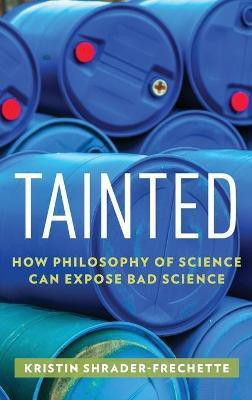
Tainted(English, Hardcover, Shrader-Frechette Kristin)
- Shrader-Frechette Kristin
Paperback & Hardcover deals ―
Amazon IndiaGOFlipkart ₹ 2604SnapdealGOSapnaOnlineGOJain Book AgencyGOBooks Wagon₹1,125Book ChorGOCrosswordGODC BooksGOe-book & Audiobook deals ―
Amazon India GOGoogle Play Books GOAudible GO* Price may vary from time to time.
* GO = We're not able to fetch the price (please check manually visiting the website).
Know about the book -
Tainted(English, Hardcover, Shrader-Frechette Kristin) is written by Shrader-Frechette Kristin and published by Oxford University Press Inc. It's available with International Standard Book Number or ISBN identification 0199396418 (ISBN 10) and 9780199396412 (ISBN 13).
Three-fourths of scientific research in the United States is funded by special interests. Many of these groups have specific practical goals, such as developing pharmaceuticals or establishing that a pollutant causes only minimal harm. For groups with financial conflicts of interest, their scientific findings often can be deeply flawed.To uncover and assess these scientific flaws, award-winning biologist and philosopher of science Kristin Shrader-Frechette uses the analytical tools of classic philosophy of science. She identifies and evaluates the concepts, data, inferences, methods, models, and conclusions of science tainted by the influence of special interests. As a result, she challenges accepted scientific findings regarding risks such as chemical toxins and carcinogens, ionizing radiation, pesticides, hazardous-waste disposal, development of environmentally sensitive lands, threats to endangered species, and less-protective standards for workplace-pollution exposure. In so doing, she dissects the science on which many contemporary scientific controversies turn. Demonstrating and advocating "liberation science," she shows how practical, logical, methodological, and ethical evaluations of science can both improve its quality and credibility -- and protect people from harm caused by flawed science, such as underestimates of cancers caused by bovine growth hormones, cell phones, fracking, or high-voltage wires.This book is both an in-depth look at the unreliable scientific findings at the root of contemporary debates in biochemistry, ecology, economics, hydrogeology, physics, and zoology -- and a call to action for scientists, philosophers of science, and all citizens.
