Watching Jazz(English, Paperback, unknown)
- unknown
Paperback & Hardcover deals ―
Amazon IndiaGOFlipkart ₹ 5599SnapdealGOSapnaOnlineGOJain Book AgencyGOBooks Wagon₹396Book ChorGOCrosswordGODC BooksGOe-book & Audiobook deals ―
Amazon India GOGoogle Play Books GOAudible GO* Price may vary from time to time.
* GO = We're not able to fetch the price (please check manually visiting the website).
Know about the book -
Watching Jazz(English, Paperback, unknown) is written by unknown and published by Oxford University Press Inc. It's available with International Standard Book Number or ISBN identification 0199347662 (ISBN 10) and 9780199347667 (ISBN 13).
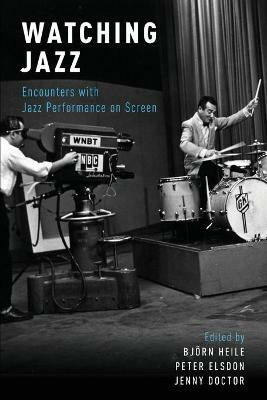
Watching Jazz: Encounters with Jazz Performance on Screen is the first systematic study of jazz on screen media. Where earlier studies have focused almost entirely on the role and portrayal of jazz in Hollywood film, the present book engages with a plethora of technologies and media from early film and soundies through television to recent developments in digital technologies and online media. Likewise, the authors discuss jazz in the widest sense, ranging from Duke Ellington and Jimmy Dorsey through the likes of Dizzy Gillespie, Art Blakey, Oscar Peterson, Miles Davis, John Coltrane and Charles Mingus to Pat Metheny. Much of this rich and fascinating material has never been studied in depth before, and what emerges most clearly are the manifold connections between the music and the media on which it was and is being recorded. Its long association with film and television has left its trace in jazz, just as online and social media are subtly shaping it now. Vice versa, visual media have always benefited from focusing on music and this significantly affected their development. The book follows these interrelations, showing how jazz was presented and represented on screen and what this tells us about the music, the people who made it and their audiences. The result is a new approach to jazz and the media, which will be required reading for students of both fields.
