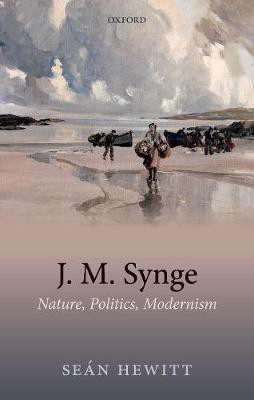
J. M. Synge(English, Hardcover, Hewitt Sean)
- Hewitt Sean
Paperback & Hardcover deals ―
Amazon IndiaGOFlipkart ₹ 14665SnapdealGOSapnaOnlineGOJain Book AgencyGOBooks Wagon₹185Book ChorGOCrosswordGODC BooksGOe-book & Audiobook deals ―
Amazon India GOGoogle Play Books GOAudible GO* Price may vary from time to time.
* GO = We're not able to fetch the price (please check manually visiting the website).
Know about the book -
J. M. Synge(English, Hardcover, Hewitt Sean) is written by Hewitt Sean and published by Oxford University Press. It's available with International Standard Book Number or ISBN identification 0198862091 (ISBN 10) and 9780198862093 (ISBN 13).
This book is a complete re-assessment of the works of J.M. Synge, one of Ireland's major playwrights. The book offers the first complete consideration of all of Synge's major plays and prose works in nearly 30 years, drawing on extensive archival research to offer innovative new readings. Much work has been done in recent years to uncover Synge's modernity and to emphasise his political consciousness. This book builds on this re-assessment, undertaking a full systematic exploration of Synge's published and unpublished works. Tracing his journey from an early Romanticism through to the more combative modernism of his later work, the book's innovative methodology treats text as process, and considers Synge's reading materials, his drafts, letters, diaries, and journalism, turning up exciting and unexpected revelations. Thus, Synge's engagement with occultism, pantheism, socialism, Darwinism, and even a late reaction against eugenic nationalisms, are all brought into the critical discussion. Breaking new ground in ascertaining the tenets of Synge's spirituality, and his aesthetic and political idealization of harmony with nature, the book also builds on new work in modernist studies, arguing that Synge can be understood as a leftist modernist, exhibiting many of the key concerns of early modernism, but routing them through a socialist politics. Thus, this book is valuable not only to considerations of Synge and the Irish Revival, but also to modernist studies more broadly.
