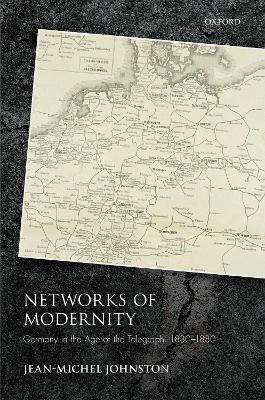
Networks of Modernity(English, Hardcover, Johnston Jean-Michel)
- Johnston Jean-Michel
Paperback & Hardcover deals ―
Amazon IndiaGOFlipkart ₹ 12808SnapdealGOSapnaOnlineGOJain Book AgencyGOBooks Wagon₹1,768Book ChorGOCrosswordGODC BooksGOe-book & Audiobook deals ―
Amazon India GOGoogle Play Books GOAudible GO* Price may vary from time to time.
* GO = We're not able to fetch the price (please check manually visiting the website).
Know about the book -
Networks of Modernity(English, Hardcover, Johnston Jean-Michel) is written by Johnston Jean-Michel and published by Oxford University Press. It's available with International Standard Book Number or ISBN identification 0198856881 (ISBN 10) and 9780198856887 (ISBN 13).
This is an open access title available under the terms of a CC BY-NC-ND 4.0 International licence. It is free to read at Oxford Scholarship Online and offered as a free PDF download from OUP and selected open access locations.Networks of Modernity: Germany in the Age of the Telegraph, 1830-1880 offers a fresh perspective on the history of Germany by investigating the origins and impact of the 'communications revolution' that transformed state and society during the nineteenth century. It focuses upon the period 1830-1880, exploring the interactions between the many different actors who developed, administered, and used one of the most important technologies of the period-the electric telegraph. It reveals the channels through which scientific and technical knowledge circulated across Central Europe during the 1830s and 1840s, stimulating both collaboration and confrontation between the scientists, technicians, businessmen, and bureaucrats involved in bringing the telegraph to life. It highlights the technology's impact upon the conduct of trade, finance, news distribution, and government in the tumultuous decades that witnessed the 1848 revolutions, the wars of unification, and the establishment of the Kaiserreich in 1871. Following the telegraph lines themselves, it weaves together the changes which took place at a local, regional, national, and eventually global level, revisiting the technology's impact upon concepts of space and time, and highlighting the importance of this period in laying the foundations for Germany's experience of a profoundly ambiguous, networked modernity.
