On the Temporality of Emotions(English, Hardcover, Marusic Berislav)
- Marusic Berislav
Paperback & Hardcover deals ―
Amazon IndiaGOFlipkart ₹ 11373SnapdealGOSapnaOnlineGOJain Book AgencyGOBooks Wagon₹2,903Book ChorGOCrosswordGODC BooksGOe-book & Audiobook deals ―
Amazon India GOGoogle Play Books GOAudible GO* Price may vary from time to time.
* GO = We're not able to fetch the price (please check manually visiting the website).
Know about the book -
On the Temporality of Emotions(English, Hardcover, Marusic Berislav) is written by Marusic Berislav and published by Oxford University Press. It's available with International Standard Book Number or ISBN identification 0198851162 (ISBN 10) and 9780198851165 (ISBN 13).
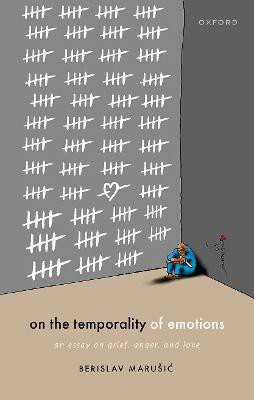
Many emotions attenuate more rapidly than the significance of the considerations that gives rise to them as we accommodate ourselves to what happens. Grief often diminishes quickly, even though the dead continue to matter to us; anger often evaporates, even though the injustice to which it responds remains undiminished. Nonetheless, such accommodation seems acceptable: it would be a mistake to be persistently grieving or to be relentlessly angry. But how could it be acceptable, if the reasons for grief and anger remain significant? Unlike grief and anger, whose diminution is puzzling, what seems puzzling in the case of love is its continuation. In its self-consciousness, love is endless; in loving someone, we foresee no end to our love. Yet we know that love can end: hearts are broken, lovers betrayed, and people grow apart. Does the self-consciousness of love involve a mistake? Or can we reasonably think of our love as lasting?On the Temporality of Emotions argues that whereas grief and anger reasonably diminish, love can rationally be conceived as endless. Berislav Marusic draws on contemporary theories of the emotions, especially grief and love, as well as recent accounts of reasons. It puts forward an account of emotional self-consciousness as, at once, embodied and rational, and maintains that accommodation reveals an irreconcilable moment in our emotional life, a moment that philosophical reflection ought not seek to resolve, lest our emotions are conceived as too neat, and philosophy as too comforting.
