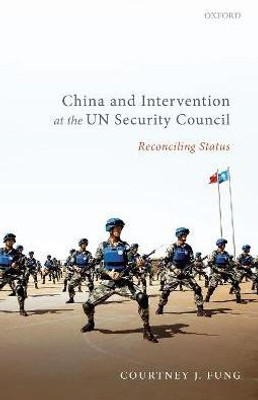
China and Intervention at the UN Security Council(English, Hardcover, Fung Courtney J.)
- Fung Courtney J.
Paperback & Hardcover deals ―
Amazon IndiaGOFlipkart ₹ 4025SnapdealGOSapnaOnlineGOJain Book AgencyGOBooks Wagon₹530Book ChorGOCrosswordGODC BooksGOe-book & Audiobook deals ―
Amazon India GOGoogle Play Books GOAudible GO* Price may vary from time to time.
* GO = We're not able to fetch the price (please check manually visiting the website).
Know about the book -
China and Intervention at the UN Security Council(English, Hardcover, Fung Courtney J.) is written by Fung Courtney J. and published by Oxford University Press. It's available with International Standard Book Number or ISBN identification 0198842740 (ISBN 10) and 9780198842743 (ISBN 13).
What explains China's response to intervention at the UN Security Council? China and Intervention at the UN Security Council argues that status is an overlooked determinant in understanding its decisions, even in the apex cases that are shadowed by a public discourse calling for foreign-imposed regime change in Sudan, Libya, and Syria. It posits that China reconciles its status dilemma as it weighs decisions to intervene: seeking recognition from both its intervention peer groups of great powers and developing states. Understanding the impact and scope conditions of status answers why China has taken certain positions regarding intervention and how these positions were justified. Foreign policy behavior that complies with status, and related social factors like self-image and identity, means that China can select policy options bearing material costs. China and Intervention at the UN Security Council offers a rich study of Chinese foreign policy, going beyond works available in breadth and in depth. It draws on an extensive collection of data, including over two hundred interviews with UN officials and Chinese foreign policy elites, participant observation at UN Headquarters, and a dataset of Chinese-language analysis regarding foreign-imposed regime change and intervention. The book concludes with new perspectives on the malleability of China's core interests, insights about the application of status for cooperation and the implications of the status dilemma for rising powers.
