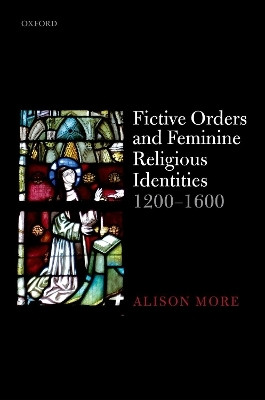
Fictive Orders and Feminine Religious Identities, 1200-1600(English, Hardcover, More Alison)
- More Alison
Paperback & Hardcover deals ―
Amazon IndiaGOFlipkart ₹ 2660SnapdealGOSapnaOnlineGOJain Book AgencyGOBooks Wagon₹3,724Book ChorGOCrosswordGODC BooksGOe-book & Audiobook deals ―
Amazon India GOGoogle Play Books GOAudible GO* Price may vary from time to time.
* GO = We're not able to fetch the price (please check manually visiting the website).
Know about the book -
Fictive Orders and Feminine Religious Identities, 1200-1600(English, Hardcover, More Alison) is written by More Alison and published by Oxford University Press. It's available with International Standard Book Number or ISBN identification 0198807694 (ISBN 10) and 9780198807698 (ISBN 13).
Any visitor to Belgium or the Netherlands is immediately struck by the number of convents and beguinages (begijnhoven) in both major cities and small towns. Their number and location in urban centres suggests that the women who inhabited them once held a prominent role. Despite leaving a visible mark on cities in Europe, much of the story of these women - known variously as beguines, tertiaries, klopjes, recluses, and anchoresses - remains to be told. Instead of aspiring to live as traditional religious, they transcended normative assumptions about religion and gender and had a very real impact on their religious and secular worlds. The sources for their tale are often fragmentary and difficult to interpret. However, careful scrutiny allows their voices to be heard. Drawing on an array of sources including religious rules, sermons, hagiographic vitae, and rapiaria, Fictive Orders and Feminine Religious Identities traces the story of pious laywomen between the thirteenth and sixteenth centuries. It both emphasizes the innovative roles of women who transcended established forms of institutional religious life and reveals the ways in which historiographical habits have obscured the dynamic and fluid nature of their histories. By highlighting the development of irregular and extraregular communities and tracing the threads of monasticisation that wove their way around pious laywomen, this book draws attention to the vibrant and dynamic culture of feminine lay piety that persisted from the later middle ages onwards.
