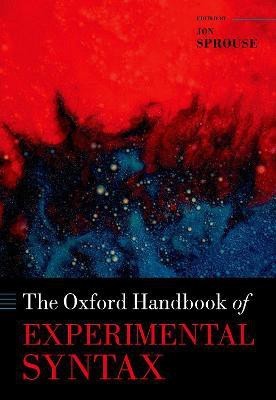
The Oxford Handbook of Experimental Syntax(English, Hardcover, unknown)
- unknown
Paperback & Hardcover deals ―
Amazon IndiaGOFlipkart ₹ 21466SnapdealGOSapnaOnlineGOJain Book AgencyGOBooks Wagon₹2,080Book ChorGOCrosswordGODC BooksGOe-book & Audiobook deals ―
Amazon India GOGoogle Play Books GOAudible GO* Price may vary from time to time.
* GO = We're not able to fetch the price (please check manually visiting the website).
Know about the book -
The Oxford Handbook of Experimental Syntax(English, Hardcover, unknown) is written by unknown and published by Oxford University Press. It's available with International Standard Book Number or ISBN identification 0198797729 (ISBN 10) and 9780198797722 (ISBN 13).
This volume showcases the contributions that formal experimental methods can make to syntactic research in the 21st century. Syntactic theory is both a domain of study in its own right, and one component of an integrated theory of the cognitive neuroscience of language. It provides a theory of the mediation between sound and meaning, a theory of the representations constructed during sentence processing, and a theory of the end-state for language acquisition. Given the highly interactive nature of the theory of syntax, this volume defines "experimental syntax" in the broadest possible terms, exploring both formal experimental methods that have been part of the domain of syntax since its inception (i.e., acceptability judgment methods) and formal experimental methods that have arisen through the interaction of syntactic theory with the domains of acquisition, psycholinguistics, and neurolinguistics. The Oxford Handbook of Experimental Syntax brings these methods together into a single experimental syntax volume for the first time, providing high-level reviews of major experimental work, offering guidance for researchers looking to incorporate these diverse methods into their own work, and inspiring new research that will push the boundaries of the theory of syntax. It will appeal to students and scholars from the advanced undergraduate level upwards in a range of fields including syntax, acquisition, psycholinguistics, neurolinguistics, and computational linguistics.
