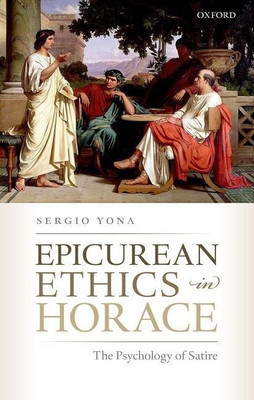
Epicurean Ethics in Horace(English, Hardcover, Yona Sergio)
- Yona Sergio
Paperback & Hardcover deals ―
Amazon IndiaGOFlipkart ₹ 2658SnapdealGOSapnaOnlineGOJain Book AgencyGOBooks Wagon₹1,846Book ChorGOCrosswordGODC BooksGOe-book & Audiobook deals ―
Amazon India GOGoogle Play Books GOAudible GO* Price may vary from time to time.
* GO = We're not able to fetch the price (please check manually visiting the website).
Know about the book -
Epicurean Ethics in Horace(English, Hardcover, Yona Sergio) is written by Yona Sergio and published by Oxford University Press. It's available with International Standard Book Number or ISBN identification 0198786557 (ISBN 10) and 9780198786559 (ISBN 13).
Over the centuries leading up to their composition many genres and authors have emerged as influences on Horace's Satires, which in turn has led to a wide variety of scholarly interpretations. This study aims to expand the existing dialogue by exploring further the intersection of ancient satire and ethics, focusing on the moral tradition of Epicureanism through the lens of one source in particular: Philodemus of Gadara. Philodemus was an Epicurean philosopher who wrote for a Roman audience and was one of Horace's contemporaries and neighbours in Italy. His works, which were preserved by the eruption of Vesuvius in AD 79 but have nevertheless not been widely read on account of their fragmentary nature, feature a range of ethical treatises on subjects including patronage, friendship, flattery, frankness, poverty, and wealth. Epicurean Ethics in Horace: The Psychology of Satire offers a serious consideration of the role of Philodemus' Epicurean teachings in Horace's Satires and argues that the central concerns of the philosopher's work not only lie at the heart of the poet's criticisms of Roman society and its shortcomings, but also lend to the collection a certain coherence and overall unity in its underlying convictions. The result is a ground-breaking study of the deep and pervasive influence of Epicurean ethical philosophy on Horace's Satires, which also reveals something of the poet behind the literary mask or persona by demonstrating the philosophical consistency of his position throughout the two books.
