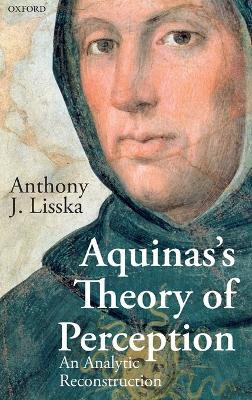
Aquinas's Theory of Perception(English, Hardcover, Lisska Anthony J.)
- Lisska Anthony J.
Paperback & Hardcover deals ―
Amazon IndiaGOFlipkart ₹ 3100SnapdealGOSapnaOnlineGOJain Book AgencyGOBooks Wagon₹5,735Book ChorGOCrosswordGODC BooksGOe-book & Audiobook deals ―
Amazon India GOGoogle Play Books GOAudible GO* Price may vary from time to time.
* GO = We're not able to fetch the price (please check manually visiting the website).
Know about the book -
Aquinas's Theory of Perception(English, Hardcover, Lisska Anthony J.) is written by Lisska Anthony J. and published by Oxford University Press. It's available with International Standard Book Number or ISBN identification 0198777906 (ISBN 10) and 9780198777908 (ISBN 13).
Anthony J. Lisska presents a new analysis of Thomas Aquinas's theory of perception. While much work has been undertaken on Aquinas's texts, little has been devoted principally to his theory of perception and less still on a discussion of inner sense. The thesis of intentionality serves as the philosophical backdrop of this analysis while incorporating insights from Brentano and from recent scholarship. The principal thrust is on the importance of inner sense, a much-overlooked area of Aquinas's philosophy of mind, with special reference to the vis cogitativa. Approaching the texts of Aquinas from contemporary analytic philosophy, Lisska suggests a modest 'innate' or 'structured' interpretation for the role of this inner sense faculty. Dorothea Frede suggests that this faculty is an 'embarrassment' for Aquinas; to the contrary, the analysis offered in this book argues that were it not for the vis cogitativa, Aquinas's philosophy of mind would be an embarrassment. By means of this faculty of inner sense, Aquinas offers an account of a direct awareness of individuals of natural kinds--referred to by Aquinas as incidental objects of sense--which comprise the principal ontological categories in Aquinas's metaphysics. By using this awareness of individuals of a natural kind, Aquinas can make better sense out of the process of abstraction using the active intellect (intellectus agens). Were it not for the vis cogitativa, Aquinas would be unable to account for an awareness of the principal ontological category in his metaphysics.
