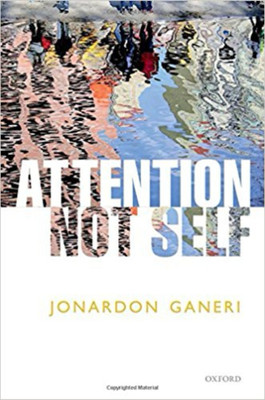
Attention, Not Self(English, Hardcover, Ganeri Jonardon)
- Ganeri Jonardon
Paperback & Hardcover deals ―
Amazon IndiaGOFlipkart ₹ 1494SnapdealGOSapnaOnlineGOJain Book Agency₹1495Books Wagon₹433Book ChorGOCrosswordGODC BooksGOe-book & Audiobook deals ―
Amazon India GOGoogle Play Books GOAudible GO* Price may vary from time to time.
* GO = We're not able to fetch the price (please check manually visiting the website).
Know about the book -
Attention, Not Self(English, Hardcover, Ganeri Jonardon) is written by Ganeri Jonardon and published by Oxford University Press. It's available with International Standard Book Number or ISBN identification 0198757409 (ISBN 10) and 9780198757405 (ISBN 13).
Jonardon Ganeri presents an account of mind in which attention, not self, explains the experiential and normative situatedness of human beings in the world. Attention consists in an organisation of awareness and action at the centre of which there is neither a practical will nor a phenomenological witness. Attention performs two roles in experience, a selective role of placing and a focal role of access. Attention improves our epistemic standing, because it is in the nature of attention to settle on what is real and to shun what is not real. When attention is informed by expertise, it is sufficient for knowledge. That gives attention a reach beyond the perceptual: for attention is a determinable whose determinates include the episodic memory from which our narrative identities are made, the empathy for others that situates us in a social world, and the introspection that makes us self-aware. Empathy is other-directed attention, placed on you and focused on your states of mind; it is akin to listening. Empathetic attention is central to a range of experiences that constitutively require a contrast between oneself and others, all of which involve an awareness of oneself as the object of another's attention. An analysis of attention as mental action gainsays authorial conceptions of self, because it is the nature of intending itself, effortful attention in action, to settle on what to do and to shun what not to do. In ethics, a conception of persons as beings with a characteristic capacity for attention offers hope for resolution in the conflict between individualism and impersonalism. Attention, Not Self is a contribution to a growing body of work that studies the nature of mind from a place at the crossroads of three disciplines: philosophy in the analytical and phenomenological traditions, contemporary cognitive science and empirical work in cognitive psychology, and Buddhist theoretical literature.
