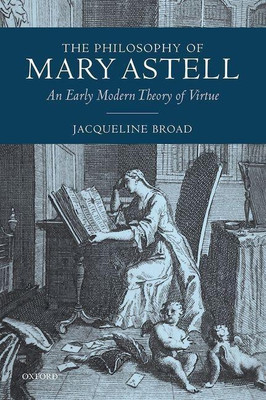
The Philosophy of Mary Astell(English, Hardcover, Broad Jacqueline)
- Broad Jacqueline
Paperback & Hardcover deals ―
Amazon IndiaGOFlipkart ₹ 2768SnapdealGOSapnaOnlineGOJain Book AgencyGOBooks Wagon₹396Book ChorGOCrosswordGODC BooksGOe-book & Audiobook deals ―
Amazon India GOGoogle Play Books GOAudible GO* Price may vary from time to time.
* GO = We're not able to fetch the price (please check manually visiting the website).
Know about the book -
The Philosophy of Mary Astell(English, Hardcover, Broad Jacqueline) is written by Broad Jacqueline and published by Oxford University Press. It's available with International Standard Book Number or ISBN identification 0198716818 (ISBN 10) and 9780198716815 (ISBN 13).
Mary Astell (1666-1731) is best known today as one of the earliest English feminists. She is also known as a Tory political pamphleteer, an Anglican apologist, an eloquent rhetorician, and an educational theorist. In this book, Jacqueline Broad interprets Astell first and foremost as a moral philosopher, or as someone committed to providing guidance on how best to live and how to attain happiness. The central claim of this work is that all the different strands of Astell's thought--her theory of knowledge, her metaphysics, her philosophy of the passions, her feminist vision, and her conservative political views--are best understood in light of her ethical objectives. To demonstrate this, Broad examines Astell's major writings and traces her programme to bring about a moral transformation of character in her fellow women. This programme draws on several key aspects of seventeenth-century philosophy, including Cartesian and Neoplatonist epistemologies, proofs for the existence of God, arguments for the immaterial soul, and theories about how to regulate the passions in accordance with reason. At the heart of Astell's philosophy, it is argued, lies a theory of virtue and guidelines on how to cultivate generosity of character, a benevolent disposition toward other people, and the virtue of moderation.This book will help readers to see Astell's feminist, political, and religious views in the context of her wider philosophical vision. It provides a rich and illuminating account of a unique female-centred contribution to the philosophy of the early modern period. It will appeal to students and scholars in philosophy, history of ideas, and gender studies.
