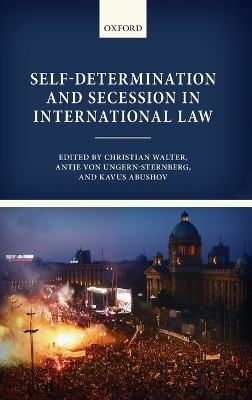
Self-Determination and Secession in International Law(English, Hardcover, unknown)
- unknown
Paperback & Hardcover deals ―
Amazon IndiaGOFlipkart ₹ 3699SnapdealGOSapnaOnlineGOJain Book AgencyGOBooks Wagon₹575Book ChorGOCrosswordGODC BooksGOe-book & Audiobook deals ―
Amazon India GOGoogle Play Books GOAudible GO* Price may vary from time to time.
* GO = We're not able to fetch the price (please check manually visiting the website).
Know about the book -
Self-Determination and Secession in International Law(English, Hardcover, unknown) is written by unknown and published by Oxford University Press. It's available with International Standard Book Number or ISBN identification 019870237X (ISBN 10) and 9780198702375 (ISBN 13).
Peoples and minorities in many parts of the world assert a right to self-determination, autonomy, and even secession from a state, which naturally conflicts with that state's sovereignty and territorial integrity. The right of a people to self-determination and secession has existed as a concept within international law since the American Declaration of Independence in 1776, but the exact definition of these concepts, and the conditions required for their application, remain unclear. The Advisory Opinion of the International Court of Justice concerning the Declaration of Independency of Kosovo (2010), which held that the Kosovo declaration of independence was not in violation of international law, has only led to further questions. This book takes four conflicts in the post-Soviet Commonwealth of Independent States (CIS) as a starting point for examining the current state of the law of self-determination and secession. Four entities, Transnistria (Moldova), South Ossetia, Abkhazia (both Georgia), and Nagorno-Karabakh (Azerbaijan), claim to be entitled not only to self-determination but also to secession from their mother state. For this entitlement they rely on historic affiliations, and on charges of discrimination and massive human rights violations committed by their mother state. This book sets out its analysis of these critical issue in three parts, providing a detailed understanding of the principles of international law on which they rely: The first part sets out the contours and meaning of self-determination and secession, including an overall assessment of secession within the Commonwealth of Independent States. The second section provides case studies investigating the events in Transnistria, South Ossetia, Abkhazia, and Nagorno-Karabach in greater detail. The third and final section extends the scope of the examination, providing a comparative analysis of similar conflicts involving questions of self-determination and secession in Kosovo, Western Sahara, and Eritrea.
