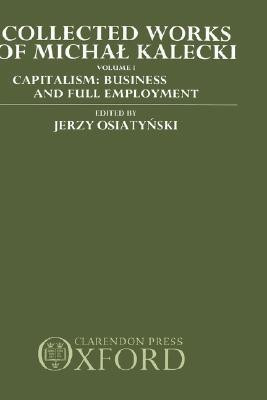
Collected Works of Michal Kalecki: Volume I. Capitalism: Business Cycles and Full Employment(English, Hardcover, Kalecki Michal)
- Kalecki Michal
Paperback & Hardcover deals ―
Amazon IndiaGOFlipkart ₹ 3411SnapdealGOSapnaOnlineGOJain Book AgencyGOBooks WagonGOBook ChorGOCrosswordGODC BooksGOe-book & Audiobook deals ―
Amazon India GOGoogle Play Books GOAudible GO* Price may vary from time to time.
* GO = We're not able to fetch the price (please check manually visiting the website).
Know about the book -
Collected Works of Michal Kalecki: Volume I. Capitalism: Business Cycles and Full Employment(English, Hardcover, Kalecki Michal) is written by Kalecki Michal and published by Oxford University Press. It's available with International Standard Book Number or ISBN identification 0198285388 (ISBN 10) and 9780198285380 (ISBN 13).
This is the first volume in a new, definitive, seven-volume edition of the works of Michal Kalecki, one of the twentieth century's most distinguished economists. Kalecki was one of the three contemporary economists to arrive at the conclusions publicized by Keynes, although Kalecki arguably presented these views even earlier than Keynes.Volume I contains Kalecki's writings on the theory of the business cycle and full employment. His seminal Essay on the Business Cycle Theory is preceded by his earlier theoretical studies and followed by publications which developed and defended its main concepts and ideas. This volume also contains the 1939 book Essays in the Theory of Economic Fluctuations, the work which established his reputation. Also included are papers documenting his confrontation with Keynes's General Theory, including Kalecki's review of that work, and his various studies on the theory and policies relating to full employment, both the well known `Political Aspects of Full Employment' and `Three Ways to Full Employment', and those which have unfairly received less attention.The editorial comments and annexes at the end of the volume, besides giving valuable information on the background to the main texts, include illuminating exchanges of correspondence between Kalecki and Keynes, Joan Robinson, and others.
