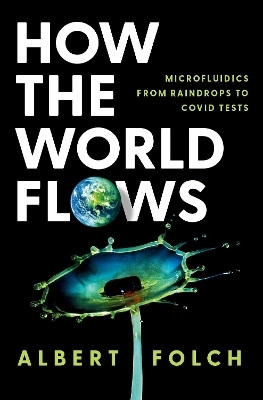
How the World Flows(English, Hardcover, Folch Albert)
- Folch Albert
Paperback & Hardcover deals ―
Amazon IndiaGOFlipkart ₹ 937SnapdealGOSapnaOnlineGOJain Book AgencyGOBooks Wagon₹620Book ChorGOCrosswordGODC BooksGOe-book & Audiobook deals ―
Amazon India GOGoogle Play Books GOAudible GO* Price may vary from time to time.
* GO = We're not able to fetch the price (please check manually visiting the website).
Know about the book -
How the World Flows(English, Hardcover, Folch Albert) is written by Folch Albert and published by Oxford University Press Inc. It's available with International Standard Book Number or ISBN identification 019777282X (ISBN 10) and 9780197772829 (ISBN 13).
How the World Flows acts like a microscope that pulls the reader into the barely noticeable, Lilliputian world of fluids at small scales--the microfluidic world-and answers the question "What is microfluidics?" in non-technical language.Microfluidics is the field of science that studies fluids constrained to spaces that are smaller than one millimeter wide, and by extension, the engineering field which builds devices that exploit the unique properties of fluids at these scales. Author Albert Folch explores this micro science which has inspired engineers to build devices such as engines, spray cans, ballpoint pens, inkjet and 3D printers, pregnancy and Covid tests, glucometers, asthma nebulizers, kidney dialysis machines, and DNA analyzers. This book also shows that many processes essential to life on Earth - such as the formation of raindrops, the rise of sap in plants, and the percolation of water through soil - are all microfluidic marvels. It examines how our cells breathe, feed, and fight diseases through small capillaries. Many ancient human inventions, ranging from soaps and sauces to the candle wick, the gauze, and the ink brush, rely on microfluidics, but the size of the fluid interactions in these systems, natural and human-made, has prevented most people from appreciating their inner workings. Through engaging and digestible stories, Folch takes a lens to this tiny science and demonstrates how big a role microfluidics play in life as we know it.
