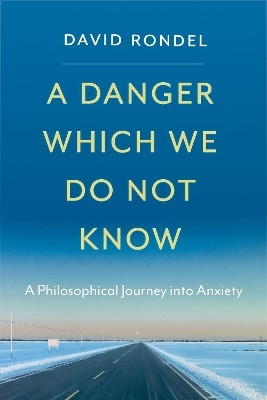
A Danger Which We Do Not Know(English, Hardcover, Rondel David)
- Rondel David
Paperback & Hardcover deals ―
Amazon IndiaGOFlipkart ₹ 4281SnapdealGOSapnaOnlineGOJain Book AgencyGOBooks Wagon₹205Book ChorGOCrosswordGODC BooksGOe-book & Audiobook deals ―
Amazon India GOGoogle Play Books GOAudible GO* Price may vary from time to time.
* GO = We're not able to fetch the price (please check manually visiting the website).
Know about the book -
A Danger Which We Do Not Know(English, Hardcover, Rondel David) is written by Rondel David and published by Oxford University Press Inc. It's available with International Standard Book Number or ISBN identification 0197767249 (ISBN 10) and 9780197767245 (ISBN 13).
A Danger Which We Do Not Know tells a story about how philosophy and anxiety are tangled up with each other. David Rondel explores how anxiety is one of the main human contexts in which the inclination to philosophize arises. The experience of anxiety sometimes prompts us to reflect and inquire, drawing us toward perennial philosophical questions about the nature of reality and knowledge, freedom and morality, the meaning of life and the prospect of death. Anxiety can give these questions fresh urgency, making them vivid and momentous in ways they otherwise might not be. Rondel also considers how turning to philosophy can sometimes offer relief for the anxious sufferer. In the face of the overwhelming force of anxiety, philosophy offers powerful tools. Philosophy helps us achieve precision and clarity of thinking that cuts through our anxiety-based stress. Highly abstract thought can also serve as a form of escapism--a happy diversion from the anxiety of everyday life. For these reasons, philosophy has a long and illustrious history as a form of therapy.The chapters in this book cover significant ground, historically and thematically, and together provide a philosophical guide to anxiety. Each chapter focusses on the work of a particular philosopher or philosophical tradition with an eye toward showing how their ideas help us better understand anxiety's nature and meaning. One of the main arguments on which the chapters converge is that anxiety is much more than simple, blood-pumping fear. The human experience of anxiety has a distinctively evaluative and interpretive element. It is bound up with our capacity to reflect on sensations of fear, to anticipate and interpret them, and to have such thoughts and feelings (themselves always mediated by language and culture) shape how we see the world and ourselves in it. Suffering with anxiety is never simply a colorless fact, but an experience that must be understood in light of what matters to us--in light of who we are and what we care about.
