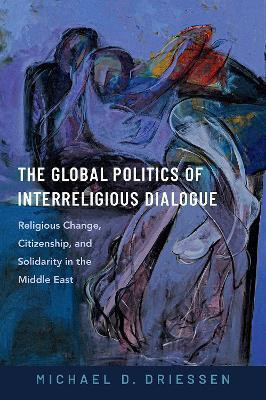
The Global Politics of Interreligious Dialogue(English, Hardcover, Driessen Michael D.)
- Driessen Michael D.
Paperback & Hardcover deals ―
Amazon IndiaGOFlipkart ₹ 10053SnapdealGOSapnaOnlineGOJain Book AgencyGOBooks Wagon₹447Book ChorGOCrosswordGODC BooksGOe-book & Audiobook deals ―
Amazon India GOGoogle Play Books GOAudible GO* Price may vary from time to time.
* GO = We're not able to fetch the price (please check manually visiting the website).
Know about the book -
The Global Politics of Interreligious Dialogue(English, Hardcover, Driessen Michael D.) is written by Driessen Michael D. and published by Oxford University Press Inc. It's available with International Standard Book Number or ISBN identification 0197671675 (ISBN 10) and 9780197671672 (ISBN 13).
Over the last thirty years, governments across the globe have formalized new relationships with religious communities through their domestic and foreign policies and have variously sought to manage, support, marginalize, and coopt religious forces through them. Many scholars view these policies as evidence of the "return of religion" to global politics although there is little consensus about the exact meaning, shape, or future of this political turn. In The Global Politics of Interreligious Dialogue, Michael D. Driessen examines the growth of state-sponsored interreligious dialogue initiatives in the Middle East and their use as a policy instrument for engaging with religious communities and ideas. Using a novel theoretical framework and drawing on five years of ethnographic fieldwork, Driessen explores both the history of interreligious dialogue and the evolution of theological approaches to religious pluralism in the traditions of Roman Catholicism and Sunni Islam. He analyzes state-centric accounts of interreligious dialogue and conceptualizes new ideas and practices of citizenship, religious pluralism, and social solidarity that characterize dialogue initiatives in the region. To make his case, Driessen presents four studies of dialogue in the Middle East--the Focolare Community in Algeria, the Adyan Foundation in Lebanon, KAICIID of Saudi Arabia, and DICID of Qatar--and highlights key interreligious dialogue declarations produced in the broader Middle East over the last two decades. Compelling and nuanced, The Global Politics of Interreligious Dialogue illustrates how religion operates in contemporary global politics, offering important lessons about the development of alternative models of democracy, citizenship, and modernity.
