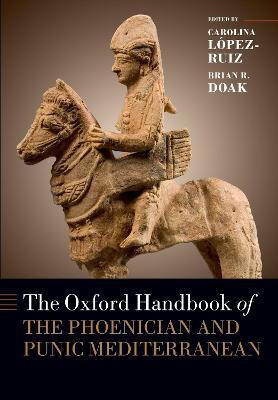
The Oxford Handbook of the Phoenician and Punic Mediterranean(English, Paperback, unknown)
- unknown
Paperback & Hardcover deals ―
Amazon IndiaGOFlipkart ₹ 6921SnapdealGOSapnaOnlineGOJain Book AgencyGOBooks Wagon₹259Book ChorGOCrosswordGODC BooksGOe-book & Audiobook deals ―
Amazon India GOGoogle Play Books GOAudible GO* Price may vary from time to time.
* GO = We're not able to fetch the price (please check manually visiting the website).
Know about the book -
The Oxford Handbook of the Phoenician and Punic Mediterranean(English, Paperback, unknown) is written by unknown and published by Oxford University Press Inc. It's available with International Standard Book Number or ISBN identification 0197654428 (ISBN 10) and 9780197654422 (ISBN 13).
The Phoenicians created the Mediterranean world as we know it--yet they remain a shadowy and poorly understood group. The academic study of the Phoenicians has come to an important crossroads; the field has grown in sheer content, sophistication of analysis, and diversity of interpretation, and we now need a current overview of where the study of these ancient seafarers and craftsman stands, and where it is going. Moreover, the field of Phoenician studies is particularly fragmented and scattered. While there is growing interest in all things Phoenician and Punic, the latest advances are mostly published in specialized journals and conference volumes in a plethora of languages.This Handbook is the first of its type to appear in over two decades, and the first ever to appear in English. In these chapters, written by a wide range of prominent and promising scholars from across Europe, North America, Australia, and the Mediterranean world, readers will find summary studies on key historical moments (such as the history of Carthage); areas of culture (organized around language, religion, and material culture); regional studies and areas of contact (spanning from the Levant and the Aegean to Iberia and North Africa); and the reception of the Phoenicians as an idea, entangled with the formation of other cultural identities, both ancient and modern.
