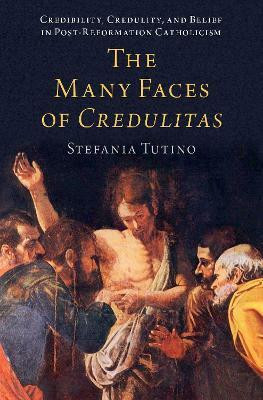
The Many Faces of Credulitas(English, Hardcover, Tutino Stefania)
- Tutino Stefania
Paperback & Hardcover deals ―
Amazon IndiaGOFlipkart ₹ 12519SnapdealGOSapnaOnlineGOJain Book AgencyGOBooks Wagon₹271Book ChorGOCrosswordGODC BooksGOe-book & Audiobook deals ―
Amazon India GOGoogle Play Books GOAudible GO* Price may vary from time to time.
* GO = We're not able to fetch the price (please check manually visiting the website).
Know about the book -
The Many Faces of Credulitas(English, Hardcover, Tutino Stefania) is written by Tutino Stefania and published by Oxford University Press Inc. It's available with International Standard Book Number or ISBN identification 0197608957 (ISBN 10) and 9780197608951 (ISBN 13).
This book is about the relationship between belief, credibility, and credulity in post-Reformation Catholicism. It argues that, starting from the end of the sixteenth century and due to different political, intellectual, cultural, and theological factors, credibility assumed a central role in post-Reformation Catholic discourse. This led to an important reconsideration of the relationship between natural reason and supernatural grace and consequently to novel and significant epistemological and moral tensions. From the perspective of the relationship between credulity, credibility, and belief, early modern Catholicism emerges not as the apex of dogmatism and intellectual repression, but rather as an engine for promoting the importance of intellectual judgment in the process of embracing faith. To be sure, finding a balance between conscience and authority was not easy for early modern Catholics. This book seeks to elucidate some of the difficulties, anxieties, and tensions caused by the novel insistence on credibility that came to dominate the theological and intellectual landscape of the early modern Catholic Church. In addition to shedding light on early modern Catholic culture, this book helps us to understand better what it means to believe. For the most part, in modern Western society we don't believe in the same things as our early modern predecessors. Even when we do believe in the same things, it is not in the same way. But believe we do, and thus understanding how early modern people addressed the question of belief might be useful as we grapple with the tension between credibility, credulity, and belief.
