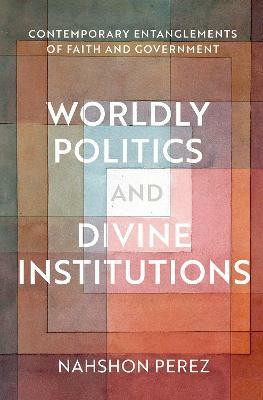
Worldly Politics and Divine Institutions(English, Hardcover, Perez Nahshon)
- Perez Nahshon
Paperback & Hardcover deals ―
Amazon IndiaGOFlipkart ₹ 8340SnapdealGOSapnaOnlineGOJain Book AgencyGOBooks Wagon₹364Book ChorGOCrosswordGODC BooksGOe-book & Audiobook deals ―
Amazon India GOGoogle Play Books GOAudible GO* Price may vary from time to time.
* GO = We're not able to fetch the price (please check manually visiting the website).
Know about the book -
Worldly Politics and Divine Institutions(English, Hardcover, Perez Nahshon) is written by Perez Nahshon and published by Oxford University Press Inc. It's available with International Standard Book Number or ISBN identification 019757971X (ISBN 10) and 9780197579718 (ISBN 13).
The institutional entanglement of religion and government takes many forms, including direct governmental funding of religious associations, legal recognition, and governmental endorsement of religious symbols in public spaces. The entanglement of church and state remains contentious in many democratic countries today. In fact, in Europe and North America, there are a growing number of instances of governments becoming entwined with religious matters.Worldly Politics and Divine Institutions explores the entanglement of religion and government in a comparative analysis of four cases within democratic countries: the British Jewish Free School (JFS) case, in which the U.K. Supreme Court forced a government-funded faith school to change its admission policies; The European Court of Human Rights decision in Martinez, in which the Catholic church kept its right to dismiss religion teachers within the Spanish public school system; The Lautsi case, in which the Italian government successfully defended its policy of mandating a crucifix in all public school classrooms - at the European Court of Human Rights; and the case of the Bladensburg World War I Memorial (often called the Peace Cross) in Maryland, in which the U.S. Supreme Court ruled that the cross's public placement and maintenance funding does not violate the non-establishment clause of the First Amendment. Perez describes how these cases create complex, hybrid religious-statist institutions and outlines a novel framework for understanding these cases.
