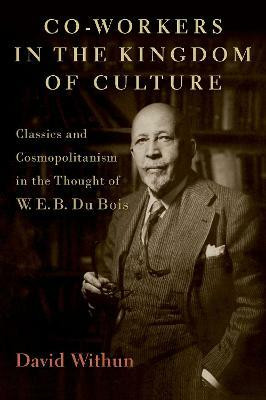
Co-workers in the Kingdom of Culture(English, Hardcover, Withun David)
- Withun David
Paperback & Hardcover deals ―
Amazon IndiaGOFlipkart ₹ 11347SnapdealGOSapnaOnlineGOJain Book AgencyGOBooks Wagon₹369Book ChorGOCrosswordGODC BooksGOe-book & Audiobook deals ―
Amazon India GOGoogle Play Books GOAudible GO* Price may vary from time to time.
* GO = We're not able to fetch the price (please check manually visiting the website).
Know about the book -
Co-workers in the Kingdom of Culture(English, Hardcover, Withun David) is written by Withun David and published by Oxford University Press Inc. It's available with International Standard Book Number or ISBN identification 0197579582 (ISBN 10) and 9780197579589 (ISBN 13).
W. E. B. Du Bois was one of the great African American intellectuals of the early twentieth century. He was a prominent civil rights leader, sociologist, historian, educator, author of several works of fiction, and one of the founding figures of Pan-Africanism. Du Bois's works are filled with allusions to the classical mythology, philosophy, and history that permeated his education. In the first book-length discussion of the topic, David Withun examines the influence of classical authors on Du Bois's thoughts about education, the arts, government, and society. The influence of classical philosophy, particularly that of Plato and Cicero, is apparent in some of Du Bois's most distinctive ideas, such as the concept of the Talented Tenth, his opposition to Booker T. Washington's industrial education, and in his support of propaganda through art.Withun also explores Du Bois's critique of the classical tradition in his responses to modern racism and colonialism. While Du Bois adopted a number of ideas from the classical tradition, he also used them to critique what he saw as a tradition gone awry. Alongside Du Bois's critique of the classical tradition, he also exhibited an increasing interest in the history--ancient and modern--of Africa and Asia. In his attempts to combat modern prejudice, Du Bois appealed to the long traditions of thought of peoples outside of Europe, in several instances pioneering the research of non-European history. Withun argues that Du Bois's absorption of the classical tradition and simultaneous appreciation of the history of Africa and Asia culminated in a modern cosmopolitanism, one that calls for a more inclusive appreciation of global culture.
