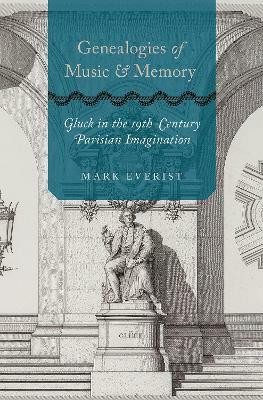
Genealogies of Music and Memory(English, Hardcover, Everist Mark)
- Everist Mark
Paperback & Hardcover deals ―
Amazon IndiaGOFlipkart ₹ 16060SnapdealGOSapnaOnlineGOJain Book AgencyGOBooks Wagon₹364Book ChorGOCrosswordGODC BooksGOe-book & Audiobook deals ―
Amazon India GOGoogle Play Books GOAudible GO* Price may vary from time to time.
* GO = We're not able to fetch the price (please check manually visiting the website).
Know about the book -
Genealogies of Music and Memory(English, Hardcover, Everist Mark) is written by Everist Mark and published by Oxford University Press Inc. It's available with International Standard Book Number or ISBN identification 0197546005 (ISBN 10) and 9780197546000 (ISBN 13).
The history of music is most often written as a sequence of composers and works. But a richer understanding of the music of the past may be obtained by also considering the afterlives of a composer's works. Genealogies of Music and Memory asks how the stage works of Christoph Willibald Gluck (1714-87) were cultivated in nineteenth-century Paris, and concludes that although the composer was not represented formally on the stage until 1859, his music was known from a wide range of musical and literary environments. Received opinion has Hector Berlioz as the sole guardian of the Gluckian flame from the 1820s onwards, and responsible -- together with the soprano Pauline Viardot -- for the 'revival' of the composer's Orfeo in 1859. The picture is much clarified by looking at the concert performances of Gluck during the first two thirds of the nineteenth century, and the ways in which they were received and the literary discourses they engendered. Coupled to questions of music publication, pedagogy, and the institutional status of the composer, such a study reveals a wide range of individual agents active in the promotion of Gluck's music for the Parisian stage. The 'revival' of Orfeo is contextualised among other attempts at reviving Gluck's works in the 1860s, and the role of Berlioz, Viardot and a host of others re-examined.
