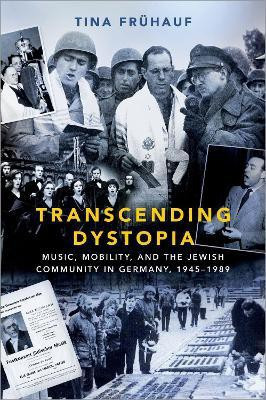
Transcending Dystopia(English, Hardcover, Fruehauf Tina)
- Fruehauf Tina
Paperback & Hardcover deals ―
Amazon IndiaGOFlipkart ₹ 12154SnapdealGOSapnaOnlineGOJain Book AgencyGOBooks Wagon₹425Book ChorGOCrosswordGODC BooksGOe-book & Audiobook deals ―
Amazon India GOGoogle Play Books GOAudible GO* Price may vary from time to time.
* GO = We're not able to fetch the price (please check manually visiting the website).
Know about the book -
Transcending Dystopia(English, Hardcover, Fruehauf Tina) is written by Fruehauf Tina and published by Oxford University Press Inc. It's available with International Standard Book Number or ISBN identification 0197532977 (ISBN 10) and 9780197532973 (ISBN 13).
By the end of the Second World War, Germany was in ruins and its Jewish population so gravely diminished that a rich cultural life seemed unthinkable. And yet, as surviving Jews returned from hiding, the camps, and their exiles abroad, so did their music. Transcending Dystopia tells the story of the remarkable revival of Jewish musical activity that developed in postwar Germany against all odds. Author Tina Fruehauf provides a kaleidoscopic panorama of musical practices in worship and social life across the country to illuminate how music contributed to transitions and transformations within and beyond Jewish communities in the aftermath of the Holocaust.Drawing on newly unearthed sources from archives and private collections, this book covers a wide spectrum of musical activity-from its role in commemorations and community events to synagogue concerts and its presence on the radio-across the divided Germany until the Fall of the Wall in 1989. Fruehauf's use of mobility as a conceptual framework reveals the myriad ways in which the reemergence of Jewish music in Germany was shaped by cultural transfer and exchange that often relied on the circulation of musicians, their ideas, and practices within and between communities. By illuminating the centrality of mobility to Jewish experiences and highlighting how postwar Jewish musical practices in Germany were defined by politics that reached across national borders to the United States and Israel, this pioneering study makes a major contribution to our understanding of Jewish life and culture in a transnational context.
