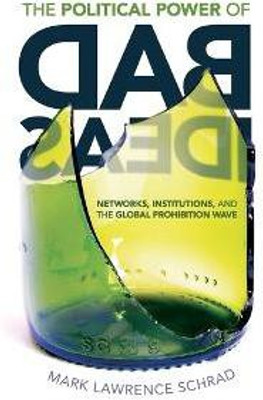
The Political Power of Bad Ideas(English, Hardcover, Schrad Mark Lawrence)
- Schrad Mark Lawrence
Paperback & Hardcover deals ―
Amazon IndiaGOFlipkart ₹ 2524SnapdealGOSapnaOnlineGOJain Book AgencyGOBooks Wagon₹413Book ChorGOCrosswordGODC BooksGOe-book & Audiobook deals ―
Amazon India GOGoogle Play Books GOAudible GO* Price may vary from time to time.
* GO = We're not able to fetch the price (please check manually visiting the website).
Know about the book -
The Political Power of Bad Ideas(English, Hardcover, Schrad Mark Lawrence) is written by Schrad Mark Lawrence and published by Oxford University Press Inc. It's available with International Standard Book Number or ISBN identification 0195391233 (ISBN 10) and 9780195391237 (ISBN 13).
In The Political Power of Bad Ideas, Mark Lawrence Schrad looks on an oddity of modern history--the broad diffusion of temperance legislation in the early twentieth century--to make a broad argument about how bad policy ideas achieve international success. His root question is this: how could a bad policy idea--one that was widely recognized by experts as bad before adoption, and which ultimately failed everywhere--come to be adopted throughout the world? To answer it, Schrad uses an institutionalist approach, and focuses in particular on the US, Russia/USSR (ironically, one of the only laws the Soviets kept on the books was the Tsarist temperance law), and Sweden. Conventional wisdom, based largely on the U.S. experience, blames evangelical zealots for the success of the temperance movement. Yet as Schrad shows, "prohibition was adopted in ten countries other than the United States, as well as countless colonial possessions-all with similar disastrous consequences, and in every case followed by repeal." Schrad focuses on the dynamic interaction of ideas and political institutions, tracing the process through which concepts of dubious merit gain momentum and achieve credibility as they wend their way through institutional structures. And while he focuses on one episode, his historical argument applies far more broadly, and even can tell us a great deal about how today's policy failures, such as reasons proffered for invading Iraq, became acceptable.
