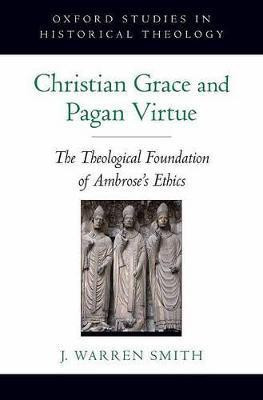
Christian Grace and Pagan Virtue(English, Hardcover, Smith J. Warren)
- Smith J. Warren
Paperback & Hardcover deals ―
Amazon IndiaGOFlipkart ₹ 3032SnapdealGOSapnaOnlineGOJain Book AgencyGOBooks Wagon₹505Book ChorGOCrosswordGODC BooksGOe-book & Audiobook deals ―
Amazon India GOGoogle Play Books GOAudible GO* Price may vary from time to time.
* GO = We're not able to fetch the price (please check manually visiting the website).
Know about the book -
Christian Grace and Pagan Virtue(English, Hardcover, Smith J. Warren) is written by Smith J. Warren and published by Oxford University Press Inc. It's available with International Standard Book Number or ISBN identification 0195369939 (ISBN 10) and 9780195369939 (ISBN 13).
Ambrose of Milan (340-397) was the first Christian bishop to write a systematic account of Christian ethics, in the treatise De Officiis, variously translated as "on duties" or "on responsibilities." But Ambrose also dealt with the moral life in other works, notably his sermons on the patriarchs and his addresses to catechumens and newly baptized. There is a vast modern literature on Ambrose, but only in recent decades has he begun to be taken seriously as a thinker, not just as a working bishop and ecclesiastical politician. Because Ambrose was one of the few Latin Christian writers in antiquity who knew Greek, another major area of Ambrose scholarship has been the study of his sources, notably the Jewish philosopher Philo, and Christian writers such as Origen of Alexandria. In this book, Warren Smith examines the neglected biblical, liturgical and theological foundations of Ambrose's thought on ethics. Earlier studies have found little that was distinctively Christian in Ambrose's image of the virtuous person. Smith shows that though, like the pagans, Ambrose emphasized moderation, courage, justice, and prudence, for him these characteristics were shaped by the church's beliefs about God's salvific economy. The courage of a Christian facing persecution, for example, was an expression of faith in Christ's resurrection and the church's eschatological hope. Eschatology, for Ambrose, was not pagan wisdom clothed in pious language, but the very logic upon which virtue rests.
