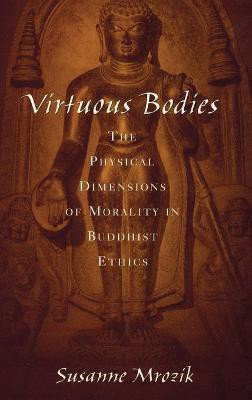
Virtuous Bodies(English, Hardcover, Mrozik Susanne)
- Mrozik Susanne
Paperback & Hardcover deals ―
Amazon IndiaGOFlipkart ₹ 3214SnapdealGOSapnaOnlineGOJain Book AgencyGOBooks Wagon₹1,069Book ChorGOCrosswordGODC BooksGOe-book & Audiobook deals ―
Amazon India GOGoogle Play Books GOAudible GO* Price may vary from time to time.
* GO = We're not able to fetch the price (please check manually visiting the website).
Know about the book -
Virtuous Bodies(English, Hardcover, Mrozik Susanne) is written by Mrozik Susanne and published by Oxford University Press Inc. It's available with International Standard Book Number or ISBN identification 0195305000 (ISBN 10) and 9780195305005 (ISBN 13).
Virtuous Bodies breaks new ground in the field of Buddhist ethics by investigating the diverse roles bodies play in ethical development. Traditionally, Buddhists assumed a close connection between body and morality. Thus Buddhist literature contains descriptions of living beings that stink with sin, are disfigured by vices, or are perfumed and adorned with virtues. Taking an influential early medieval Indian Mahayana Buddhist text-Santideva's Compendium of Training (Siksasamuccaya)-as a case study, Susanne Mrozik demonstrates that Buddhists regarded ethical development as a process of physical and moral transformation. Mrozik chooses The Compendium of Training because it quotes from over one hundred Buddhist scriptures, allowing her to reveal a broader Buddhist interest in the ethical significance of bodies. The text is a training manual for bodhisattvas, especially monastic bodhisattvas. In it, bodies function as markers of, and conditions for, one's own ethical development. Most strikingly, bodies also function as instruments for the ethical development of others. When living beings come into contact with the virtuous bodies of bodhisattvas, they are transformed physically and morally for the better. Virtuous Bodies explores both the centrality of bodies to the bodhisattva ideal and the corporeal specificity of that ideal. Arguing that the bodhisattva ideal is an embodied ethical ideal, Mrozik poses an array of fascinating questions: What does virtue look like? What kinds of physical features constitute virtuous bodies? What kinds of bodies have virtuous effects on others? Drawing on a range of contemporary theorists, this book engages in a feminist hermeneutics of recovery and suspicion in order to explore the ethical resources Buddhism offers to scholars and religious practitioners interested in the embodied nature of ethical ideals.
